
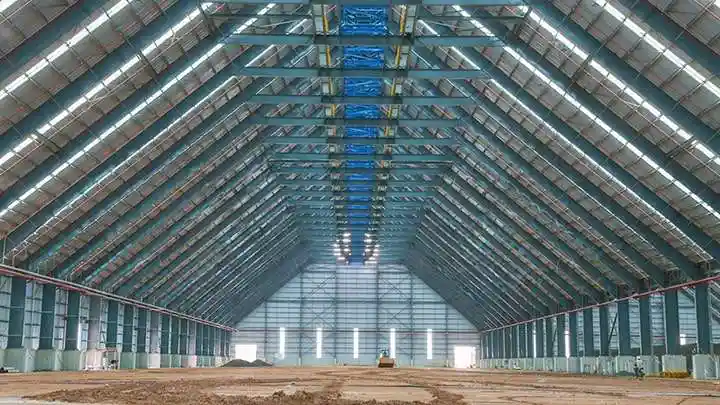
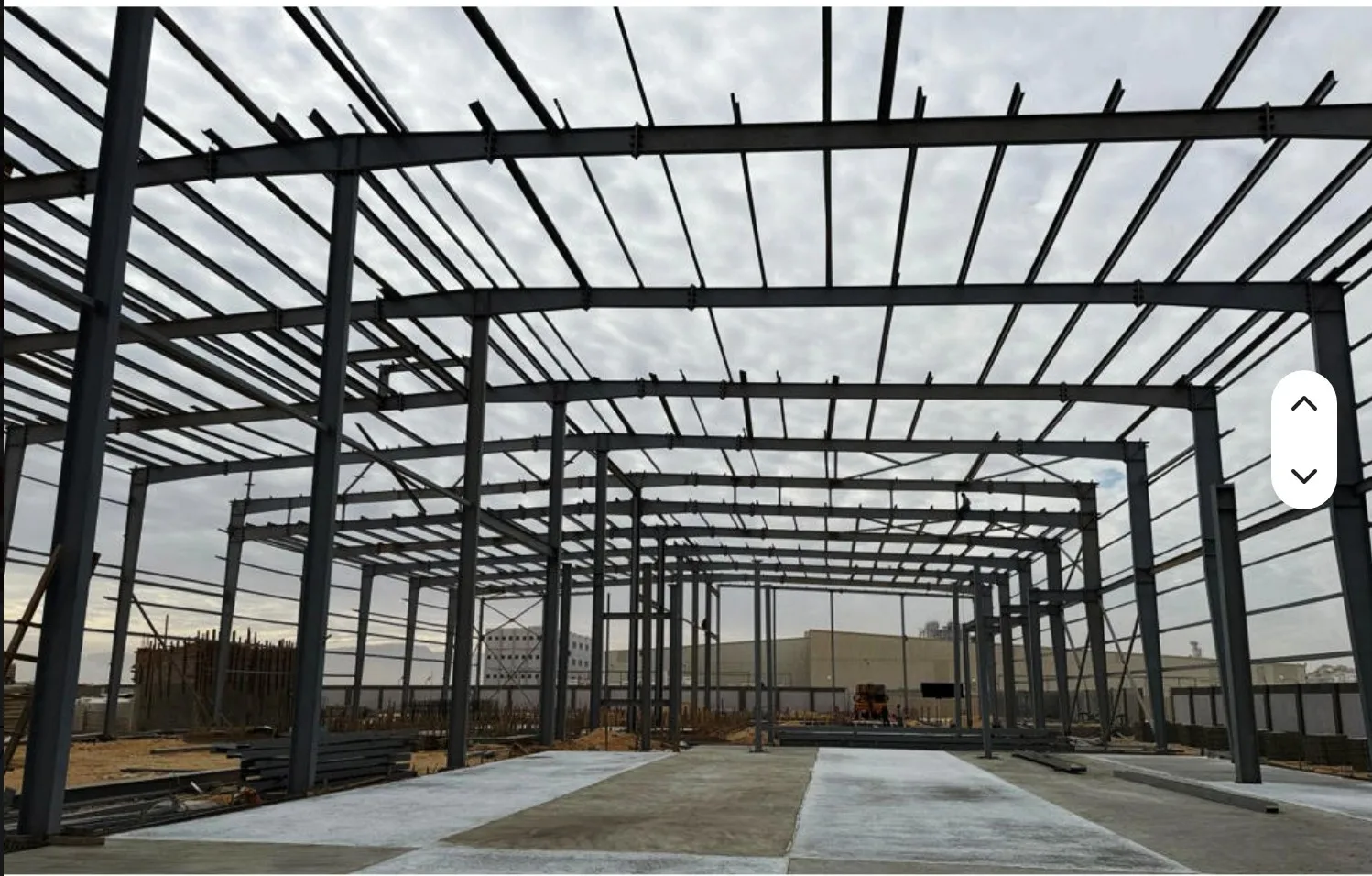
In today’s era of rapid advancement in modern logistics and supply chain systems, warehouses serve as critical infrastructure whose construction quality and efficiency directly impact a company’s operational costs and responsiveness. Among various construction methods, steel structures have emerged as the mainstream choice for modern warehouse construction due to their numerous advantages, including high strength, rapid construction, large spans, and recyclability. This article will delve into the core design considerations for steel structures in warehouse construction, analyzing practical case studies to provide reference for related projects.
Key Considerations for Steel Structure Warehouse Design
Successful steel structure warehouse construction begins with meticulous design. The design phase must comprehensively address functionality, safety, economy, and sustainability. The following points are critical:
1. Precise Load Calculation and Structural Optimization
Steel structure design must first accurately calculate various loads, including permanent loads (structural self-weight), variable loads (storage goods, equipment, snow loads, wind loads), and accidental loads. Particular attention should be given to the distribution and effects of wind loads, especially for large-span warehouses. Utilizing modern techniques such as finite element analysis for structural optimization can effectively reduce steel consumption and control costs while ensuring structural safety.
2. Rational Layout Planning and Span Design
The internal layout of a warehouse directly determines the selection of structural spans. The advantage of steel structures lies in their ability to effortlessly achieve large-span column-free spaces, maximizing storage area and cargo flow efficiency. During design, the relationship between span and steel beam height must be balanced. By integrating shelving arrangements, aisle requirements, and operational space for logistics equipment (such as overhead cranes and forklifts), the most economical and rational column grid dimensions can be determined.
3. Key Nodes and Connection Design
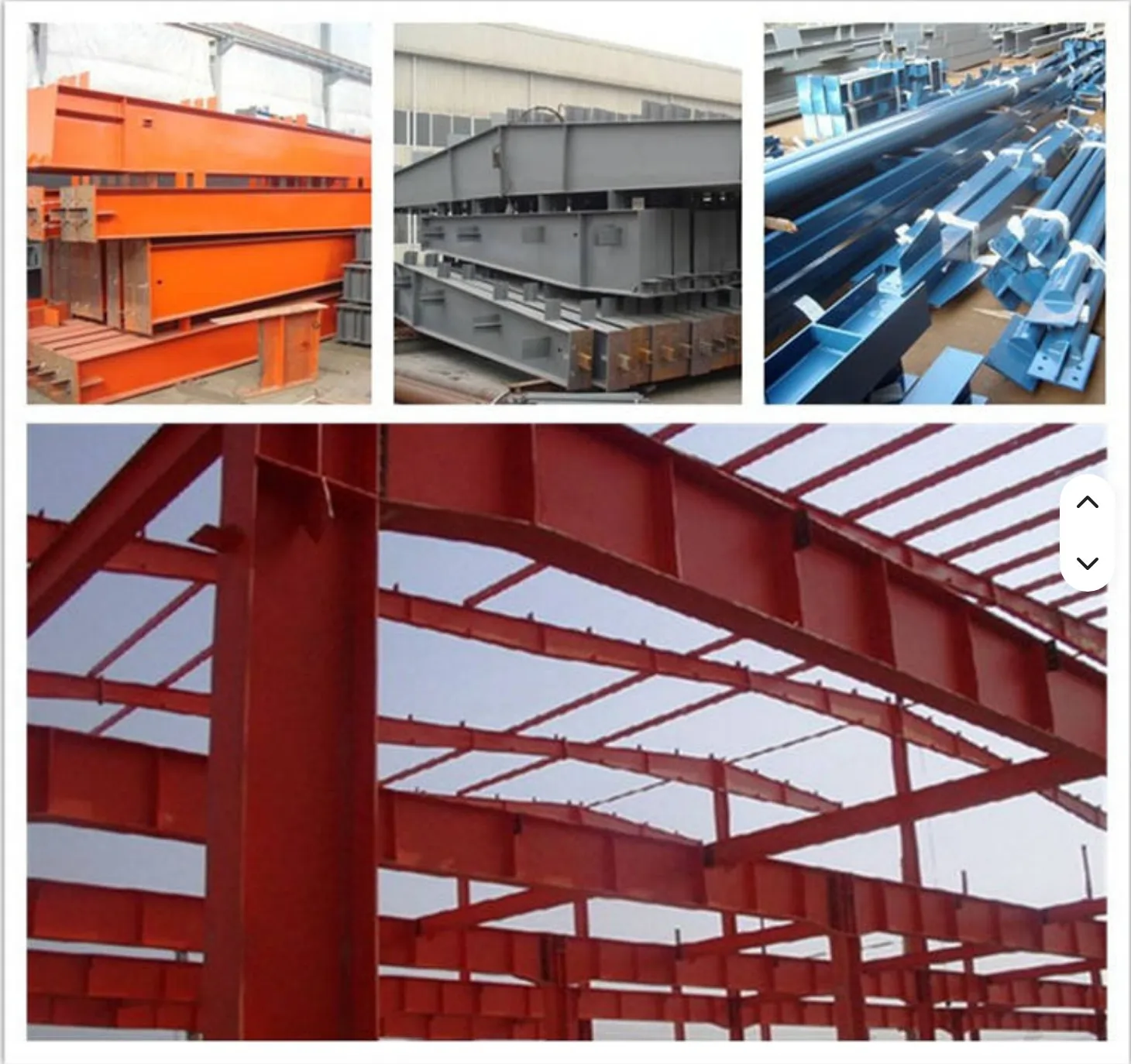
The quality of node connections is central to the safety of steel structures. Design must ensure that beam-column joints, beam-beam joints, and bracing system nodes possess sufficient strength, stiffness, and ductility. High-strength bolted connections or welded connections are commonly employed in modern warehouse construction. Design must strictly adhere to codes and standards, incorporating detailed node detailing to transmit forces and moments while resisting potential seismic actions.
4. Enclosure Systems and Fire/Corrosion Protection Considerations
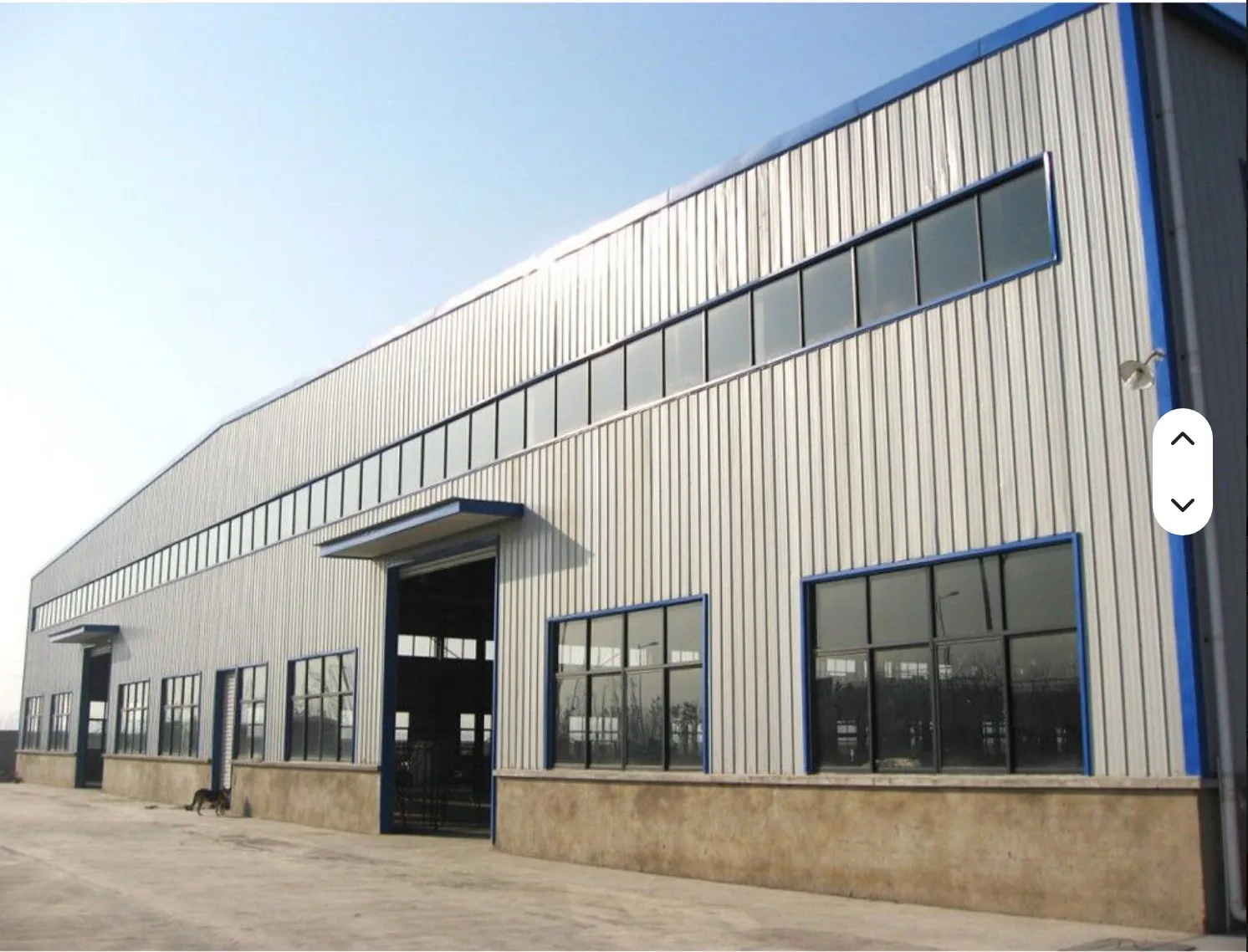
The cladding system of steel structures (roof panels and wall panels) not only affects the building’s appearance but also impacts thermal insulation, heat insulation, waterproofing, and functional performance. Additionally, fireproofing and corrosion protection for steel are key design considerations. Based on the warehouse’s fire hazard classification, appropriate fire-resistant coatings, fireproof panels, or sprinkler systems must be selected to ensure compliance with code-mandated fire resistance ratings. Simultaneously, a scientifically sound corrosion protection coating scheme must be developed to counter environmental corrosion and extend the building’s service life.
Case Studies on Steel Structure Warehouse Construction
The following two representative cases provide detailed analyses of the successful application of steel structures in warehouse construction.
Case 1: Large E-commerce Regional Distribution Center
• Project Overview: This project involves an automated distribution center for a renowned e-commerce company in East China, with a construction area of approximately 50,000 square meters. It requires high-speed sorting and efficient storage capabilities.
• Steel Structure Design Application: To accommodate automated立体仓库 and dense robotic sorting lines, the structure employs a large-span portal frame system with column grid dimensions of 30m x 12m, creating an expansive, unobstructed interior space. Variable-section H-beam columns optimize structural performance. The enclosure system utilizes sandwich panels, balancing thermal insulation requirements with rapid construction needs. To withstand the rainy season climate, the steel structure employs a heavy-duty anti-corrosion coating system.
• Achievements: Rapid steel erection shortened the main construction period by approximately 40%, freeing up time for subsequent automated equipment installation. The expansive space perfectly aligns with logistics process layouts, significantly enhancing warehouse operational efficiency.
Case 2: Precision Components Warehouse for High-End Manufacturing
• Project Overview: This facility stores temperature- and humidity-sensitive precision automotive components, demanding stringent requirements for constant temperature and humidity control, cleanliness, and structural stability.
• Steel Structure Design Application: A more robust steel frame support system was adopted to enhance overall rigidity and minimize deformation. To meet cleanliness requirements, interior metal cladding panels were installed, with all steel components factory-precoated to reduce on-site dust. Fire protection design incorporated thick-film fireproof coatings, and precise calculations were performed for equipment loads such as HVAC ductwork.
• Outcomes: Precision control of the steel structure provides an ideal foundation for high-standard enclosure installation, ensuring stable environmental parameters within the storage facility. The structural reliability effectively safeguards the storage security of high-value goods, demonstrating the adaptability of steel-structured warehouses in high-end applications.
Partner with professional steel structure manufacturers
If you are seeking a steel structure manufacturer that can fully meet high-standard requirements,Sino East Steel Enterprise co.,Ltd is well worth your closer examination.
As a seasoned steel structure manufacturer with 17 years of industry experience, the company consistently prioritize safety and quality above all else:
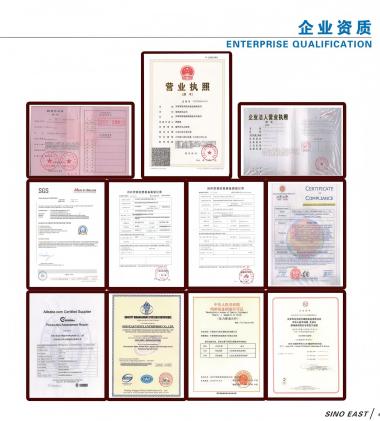
1. Full Qualifications: We hold ISO Quality Management System Certification. Recognized as a high-tech enterprise by local authorities, we ensure compliance from the source.
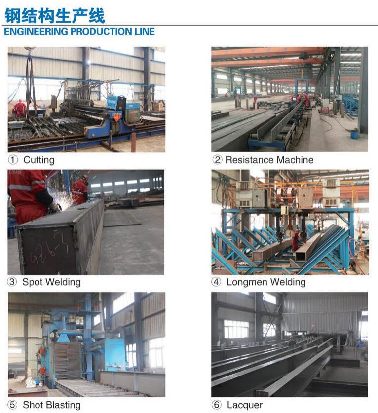
2 Full-Process Quality Monitoring: A comprehensive management system has been established covering laboratory R&D, raw material procurement, manufacturing, monitoring and control, transportation, and after-sales service.
3 Full-Process Service: We not only provide high-quality steel structure products, but also offer full-cycle services ranging from design support and installation guidance to long-term maintenance,serving as a reliable partner for your projects.
We believe that true reliability stands up to scrutiny at every step of the process.
Summary
In summary, steel structures play an irreplaceable role in modern warehouse construction. The key to their success lies in meticulous, customized design that focuses on core elements such as load-bearing capacity, span, joints, maintenance, and protection. As demonstrated by case studies, steel structures deliver efficient, economical, and reliable solutions—whether for logistics centers prioritizing efficiency and cost or precision warehouses emphasizing environmental sustainability and stability. Looking ahead, as smart construction and green building concepts gain deeper traction, steel structure warehouse development will inevitably evolve toward greater efficiency, intelligence, and sustainability.
Project Cost Guides & China Factory Supply
Transparent 2026 pricing benchmarks for importers, contractors and developers.
 PEB Building Cost in UAEReal 2026 price per square metre for warehouses and factories in Dubai, Abu Dhabi and the wider Gulf, including shipping, customs and erection.Dubai / Abu Dhabi benchmarksView details →Nigeria
 Steel Structure Cost in NigeriaLanded cost breakdown for Lagos and Abuja projects: steel tonnage, freight to Apapa, clearing, and local erection labour rates.Lagos / Abuja landed costView details →Kenya
 Steel Structure Cost in KenyaMombasa port charges, duty, transport and installation factored into a full 2026 budget for Nairobi and Mombasa industrial buildings.Nairobi / Mombasa budgetView details →China Factory
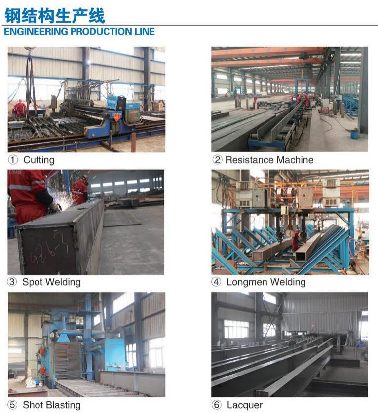 China Steel Structure ManufacturerOur own fabrication lines, ISO and CE certification, 350,000 sqm annual capacity and direct factory pricing with no trading margin.Direct factory quotationView details →