PEB Building Cost in UAE 2026: Steel Warehouse & Factory Price Guide (Dubai, Abu Dhabi)<\/h2>
The UAE is the Gulf’s most active market for pre-engineered steel buildings (PEB). Dubai’s D33 economic agenda, Abu Dhabi’s industrial zones, the expansion of Jebel Ali Free Zone and a booming logistics and manufacturing sector keep demand for steel warehouses, factories and hangars at record levels. For developers and business owners asking “how much does a PEB building cost in UAE in 2026?”, this guide breaks down real costs, import economics, regulatory approvals (Dubai Municipality, Civil Defence, SBC 301) and how to choose a supplier for Gulf conditions.
How Much Does a PEB Building Cost in the UAE in 2026?
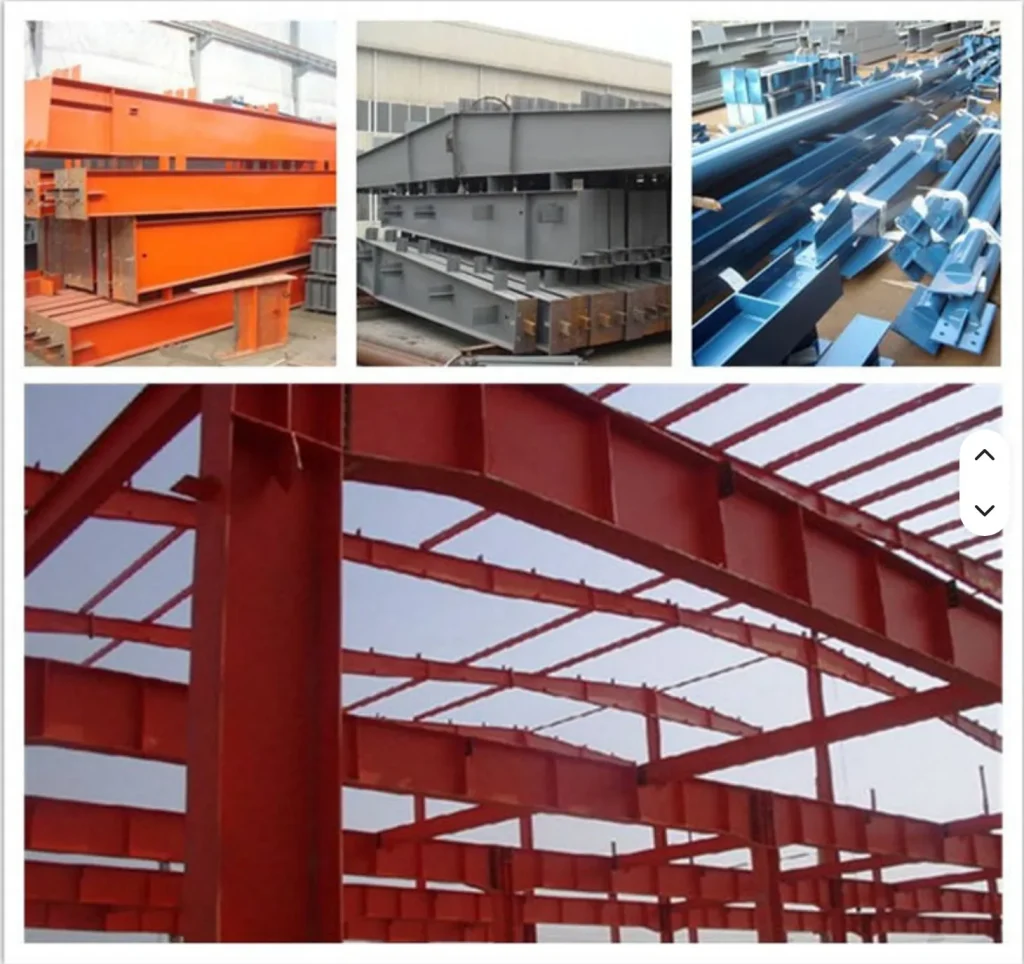
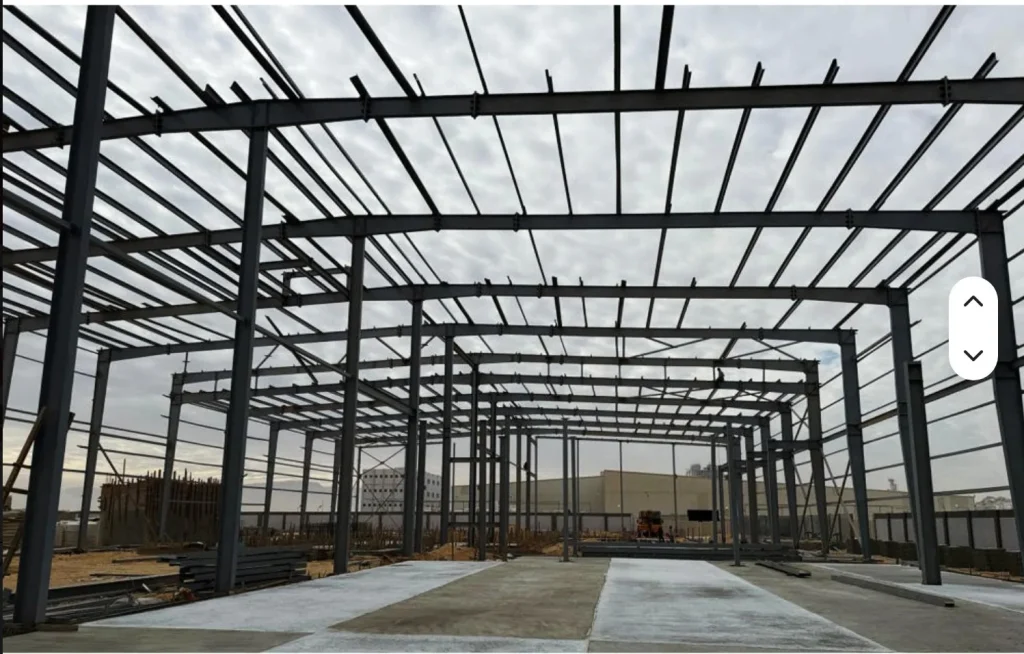
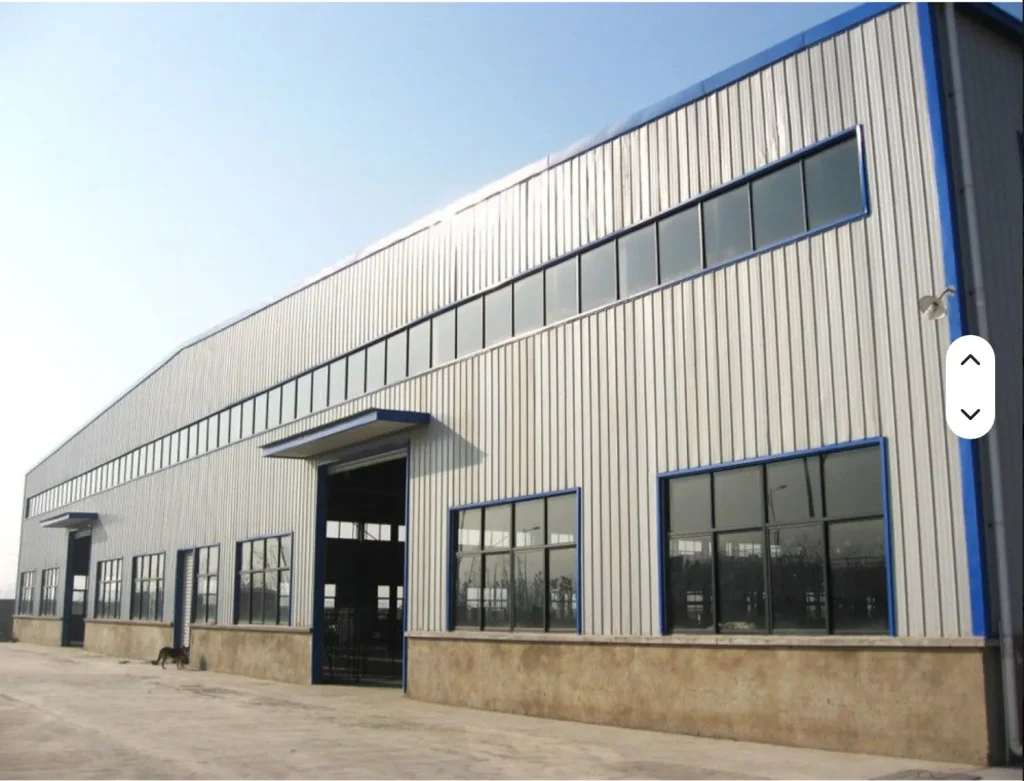
As a 2026 working estimate, a complete steel warehouse or factory in the UAE (frame, cladding, shipping and erection) typically costs USD 85–130 per square metre (approximately AED 312–478 per m²) depending on specification and location. The steel building kit ex-factory is USD 40–70 per m². Because the UAE has low import duties and excellent logistics (Jebel Ali is among the world’s busiest ports), the cost structure is different from Africa: freight and duty are smaller, while Gulf-specific specification (coastal C5 corrosion protection, thermal insulation, Civil Defence compliance) carries more weight.
| Scope of supply | USD / m² (2026 est.) | AED / m² (approx.) |
|---|---|---|
| Steel frame only (columns, rafters, purlins, bracing), ex-factory | 25–40 | 92–147 |
| Frame + roof/wall cladding (single skin) | 40–55 | 147–202 |
| Frame + insulated sandwich panels (PIR 50–100 mm) — Gulf spec | 50–70 | 184–257 |
| Complete installed building (design → erection, Dubai/Abu Dhabi) | 85–130 | 312–478 |
| Complete installed with full insulation, HVAC provisions & fire-rated walls | 115–160 | 422–588 |
These are planning ranges. Final pricing depends on clear span, eave height, wind and thermal loads, cladding system and whether erection is included. A professional supplier responds within 48 hours with a detailed bill of quantities.
UAE Steel Building Cost Structure: What You Actually Pay For
1. Import duty and VAT (the UAE advantage)
The UAE applies a 5% import duty on most goods (some items are duty-free; steel structures are generally assessable at the standard rate) plus 5% VAT. For projects inside free zones (JAFZA, KIZAD, Dubai South), duty treatment can differ — confirm with your zone authority. Compared with most African markets, this makes the UAE a low-tax environment for imported steel buildings, and Jebel Ali’s infrastructure keeps logistics costs and clearance times among the lowest in the world.
2. Freight and logistics
From Tianjin to Jebel Ali, 2026 sea freight runs roughly USD 2,500–4,500 per 40-foot container with 3–4 weeks transit. A 1,000 m² building packs into 3–5 containers. Jebel Ali clearance is typically 2–5 days. Alternatively, some Gulf clients use break-bulk or flat-rack shipping for very large frames — your supplier should advise on the most cost-effective packing for each project.
3. Erection and civil works (Gulf labour market)
Erection in the UAE costs roughly USD 18–32 per m² — competitive due to the efficient labour market. Foundations, floor slab and anchor bolts add USD 25–50 per m². Dubai Municipality requires structural drawings to be submitted by a registered engineer; a supplier with Gulf experience provides SBC-compliant calculations and anchor bolt plans ready for approval.
Why Buy PEB from China for the UAE?
- Price: Chinese ex-factory frames at USD 25–40/m² undercut regional fabrication by 20–35%, and shipping to Jebel Ali is fast and inexpensive relative to other destinations.
- Gulf-grade specification: a professional exporter designs for the Gulf’s C5 coastal corrosion environment (ISO 12944), extreme heat (SBC 301 thermal design), sand and dust, and provides EN 1090 EXC3/EXC4, ISO 9001, ISO 3834-2 certification with third-party inspection.
- Short, predictable lead times: 4–8 weeks fabrication from Tianjin plus 3–4 weeks transit means a 10–14 week door-to-site timeline — fast by regional standards.
UAE Regulatory Requirements: Approvals and Codes
- Dubai Municipality / Abu Dhabi DCD: building permits require structural drawings and calculations stamped by a registered engineer and approved by the relevant authority (Dubai Municipality, or the Abu Dhabi Department of Municipalities and Transport for the capital).
- Civil Defence: warehouses and factories must meet Civil Defence fire-safety requirements — fire-rated walls, egress, fire-fighting access and, where required, fire suppression. Insulated panels must be fire-rated (e.g., rockwool or approved PIR) and carry the required test certification.
- SBC 301: the Saudi Building Code (SBC 301) is the reference structural code widely applied across the Gulf; in the UAE, design commonly follows SBC/ASCE 7 for wind and seismic, with Eurocode 3 or AISC 360 as the steel design basis.
- ESMA / emirate-level standards: construction products may require conformity documentation; your supplier should provide EN 1090, mill certificates (EN 10204 3.1) and material test reports to support authority submissions.
Design Considerations for Gulf Conditions
- Corrosion (coastal C5): the Gulf coast is ISO 12944 C5 environment. Specify hot-dip galvanized frames (ISO 1461) or high-durability paint systems, stainless A2/A4 fasteners, and duplex systems for the most exposed locations.
- Thermal performance: light-coloured roofs (high SRI), 50–100 mm insulated sandwich panels and proper ventilation reduce interior temperatures by 8–12°C and cut HVAC sizing by 30–50% — a direct payback in the Gulf’s energy market.
- Wind and sand: design per SBC 301/ASCE 7 wind provisions with uplift-rated cladding fasteners; sealed laps, gasketed fasteners and dust-filtered ventilation keep sand out.
- Thermal movement: a 100 m-long building can expand 60–80 mm seasonally; expansion joints and sliding cladding connections are standard Gulf detailing.
For the full engineering picture, read our dedicated guide: Steel Structure for Middle East Climate: Design Considerations for Gulf & Desert Environments.
How to Choose a PEB Supplier for the UAE
Apply our full manufacturer verification checklist, and add Gulf-specific checks: (1) EN 1090 EXC3/EXC4 and ISO 3834-2 certification; (2) proven Middle East/Gulf project references (verify the list); (3) design to SBC 301/ASCE 7 with coastal C5 coating specs; (4) ability to provide drawings acceptable to Dubai Municipality/Civil Defence; (5) fire-rated panel options with test certificates; (6) third-party inspection before final payment.
PEB Building Cost in UAE — FAQ
Q: How much does a steel warehouse cost per square metre in Dubai/UAE?
A: As a 2026 estimate: USD 85–130 per m² complete and installed (AED 312–478 per m²), or USD 40–70 per m² for the building kit ex-factory. Gulf-spec insulation and coating add cost but are essential for the climate.
Q: What is the import duty on steel structures in the UAE?
A: Generally 5% import duty plus 5% VAT, with different treatment possible inside free zones. Confirm the assessment for your specific HS code — the UAE is one of the lowest-cost import environments in the world for steel buildings.
Q: How long does it take to ship a PEB from China to Dubai?
A: Fabrication 4–8 weeks, ocean transit from Tianjin to Jebel Ali 3–4 weeks, plus 2–5 days clearance — typically 8–14 weeks total door-to-site.
Q: Do I need Dubai Municipality approval for a steel warehouse?
A: Yes. Structural drawings and calculations must be submitted by a registered engineer and approved by the relevant authority (Dubai Municipality, or DMT in Abu Dhabi), plus Civil Defence fire-safety approval.
Q: Are Chinese steel buildings accepted in the UAE?
A: Yes — a large share of Gulf PEBs are fabricated in China. What matters is EN 1090/ISO certification, SBC/ASCE design compliance, C5 coating spec and complete documentation for authority submission.
Q: Can the supplier handle Civil Defence requirements?
A: A Gulf-experienced supplier provides fire-rated panel options with test certificates and designs to Civil Defence requirements — confirm this is included in your specification before ordering.
Get a UAE-Specific PEB Quote Within 48 Hours
Sino East Steel Group (founded 1993, Tianjin) supplies certified PEB and heavy steel structures to 80+ countries, with Gulf-specific design (SBC 301/ASCE 7, C5 coating, thermal insulation) and regular exports through Jebel Ali. Email paul@sinoeaststeel.com or WhatsApp +86 186 2208 8833 for a UAE-specific bill of quantities.
Prefer a marketplace? Browse our Alibaba store for standard steel structure listings.
Manufacturing & Supply for the UAE
Beyond pricing, buyers sourcing steel structures for the UAE need a steel structure supplier they can trust end-to-end: direct factory supply, FCL shipping from Tianjin to Jebel Ali, complete export documentation, and erection support for locally registered crews. Sino East Steel Group is a direct China manufacturer serving the the UAE market with exactly that process.
Q: Are you a steel structure manufacturer or a trading company?
A: We are a direct manufacturer. Sino East Steel Group has operated a 50,000 m2 fabrication facility in Tianjin, China since 1993, with our own CNC cutting, welding and hot-dip galvanizing lines — no middleman between the factory and your project.
Q: How do buyers in the UAE order and ship steel structures from China?
A: Send your building size, location and load requirements for an itemized quotation, approve the design and fabrication drawings, complete third-party inspection if required, and we ship FCL from Tianjin to Jebel Ali with full export documentation (invoice, packing list, certificate of origin, EN 10204 3.1 material certificates).
For the full factory profile — capacity, certifications, and product lines — see our China steel structure manufacturer page.
Related Articles
- Steel Structure for Middle East Climate: Design Considerations for Gulf & Desert Environments
- Pre-Engineered Building Price per Square Metre 2026: Global Comparison
- How Much Does a Steel Warehouse Cost in 2026? Full Cost Breakdown
- Steel Structure Shipping & Installation: The Complete International Buyers Guide