Steel Structure Industry 2026: Market Trends, Innovations, and Why Prefabricated Steel Is Reshaping Global Construction
By Sino East Steel Group | July 2026
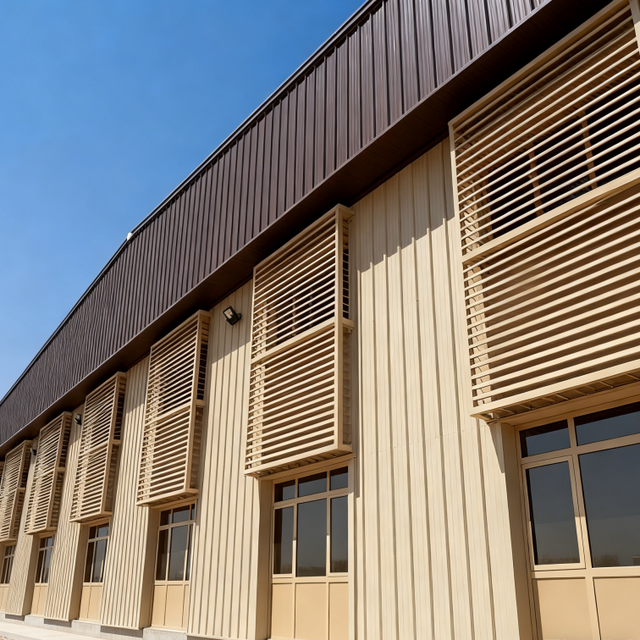
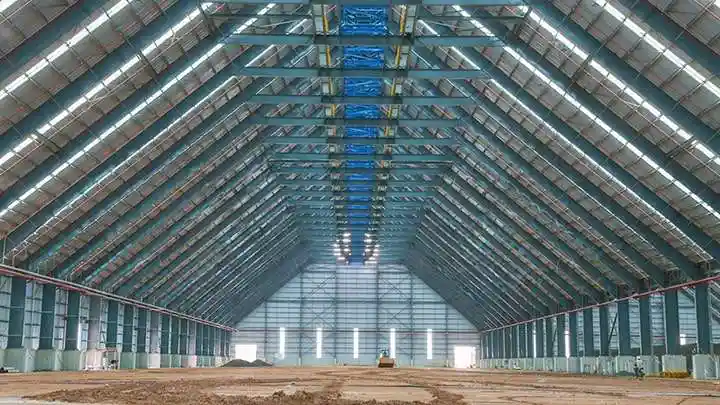
Modern prefabricated steel structure warehouse — engineered for durability and rapid deployment.
What Is Driving the Structural Steel Market to $202 Billion by 2033?
The global structural steel market has entered a period of sustained expansion. Valued at $123.4 billion in 2025, the market is projected to grow to $128.0 billion in 2026 and reach $202.1 billion by 2033, expanding at a compound annual growth rate (CAGR) of 6.7%, according to Grand View Research. This growth trajectory reflects a fundamental shift in how the world builds — from commercial high-rises to industrial facilities, infrastructure megaprojects, and renewable energy installations.
The Asia Pacific region dominates, commanding a 69.4% revenue share in 2025, with China as the single largest national market. This concentration reflects the scale of urbanization and industrialization underway across the region. But demand is broad-based: North America, Europe, the Middle East, and Africa all show steady growth, driven by infrastructure reinvestment, energy transition projects, and the accelerating adoption of prefabricated construction methods.
Why Steel? The Structural Advantage
Steel’s dominance in modern construction is not accidental. It offers a combination of properties that no competing material matches:
- Strength-to-weight ratio: Structural steel provides maximum load-bearing capacity with minimal material weight, enabling taller buildings and longer spans.
- Design flexibility: Steel frames accommodate complex architectural geometries without compromising structural integrity.
- 100% recyclability: Steel retains its mechanical properties through infinite recycling cycles, making it the definitive circular-economy material.
- Construction speed: Prefabricated steel components arrive on-site ready for assembly, cutting project timelines by 30-50% compared to conventional methods.
Key Takeaway: Structural steel is not just a construction material — it is an enabling technology for faster, more sustainable, and more cost-effective building.
What Are the Key Product Segments in Structural Steel?
Understanding the product landscape is essential for buyers, engineers, and procurement managers.
| Product Type | Market Share (2025) | Primary Applications |
|---|---|---|
| Beams (I-beams, H-beams) | 32.0% | Load-bearing frameworks, bridges, high-rises, industrial facilities |
| Angles (L-sections) | ~18% | Bracing, frames, secondary structural elements |
| Channels (C-sections) | ~15% | Wall supports, modular assemblies, architectural applications |
| Rounds & Squares | ~35% | Columns, trusses, specialized structural members |
The beams segment leads the market because beams form the backbone of virtually every steel-framed structure. I-beams and H-beams are the default choice for commercial buildings, bridges, and large-span industrial facilities where load-bearing performance is non-negotiable.
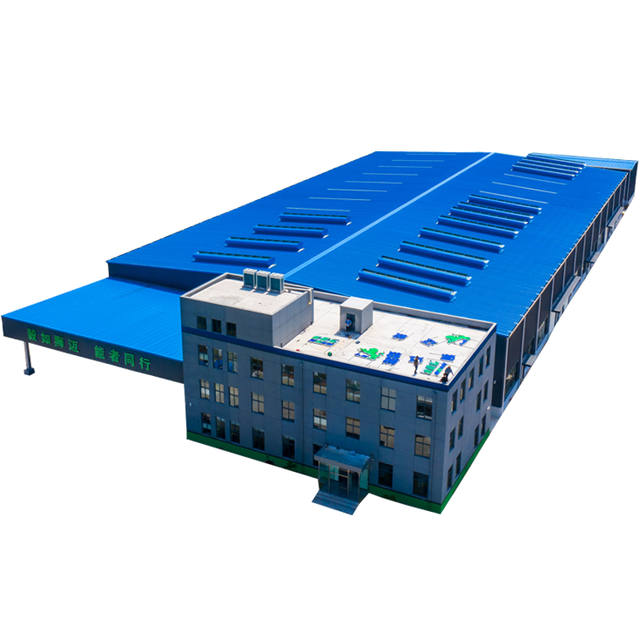
Pre-engineered large-span steel structure warehouse — optimized for clear interior space.
How Is Prefabricated Steel Construction Transforming the Industry?
The Rise of Modular and Pre-Engineered Buildings
Prefabricated steel structure buildings represent the fastest-growing segment of the construction market. The global prefabricated building and structural steel market reached $260.6 billion in 2025 and is expected to hit $405.5 billion, driven by:
- Labor shortages: With fewer skilled workers available on-site, factory-controlled fabrication reduces dependence on field labor.
- Quality consistency: Components manufactured in controlled environments achieve tighter tolerances and fewer defects — up to 60-80% fewer weld defects, according to industry data.
- Speed advantages: Production cycles are up to 40% faster than traditional methods, translating directly into earlier project completion and revenue generation.
- Waste reduction: Prefabrication minimizes on-site material waste by 30-50%, aligning with sustainability mandates.
Application Segments Driving Demand
The non-residential segment accounts for the largest share of structural steel consumption and is forecast to grow at a 6.9% CAGR from 2026 to 2033. Key sub-segments include:
| Application | Growth Drivers |
|---|---|
| Industrial facilities | Manufacturing expansion, logistics centers, data centers |
| Commercial buildings | Office complexes, retail spaces, mixed-use developments |
| Infrastructure | Bridges, airports, metro systems, energy facilities |
| Institutional | Hospitals, schools, government buildings |
Residential construction is also an emerging opportunity. Steel-framed homes, barndominiums, and multi-story apartment buildings increasingly favor steel for its durability, termite resistance, and compatibility with modular construction methods.
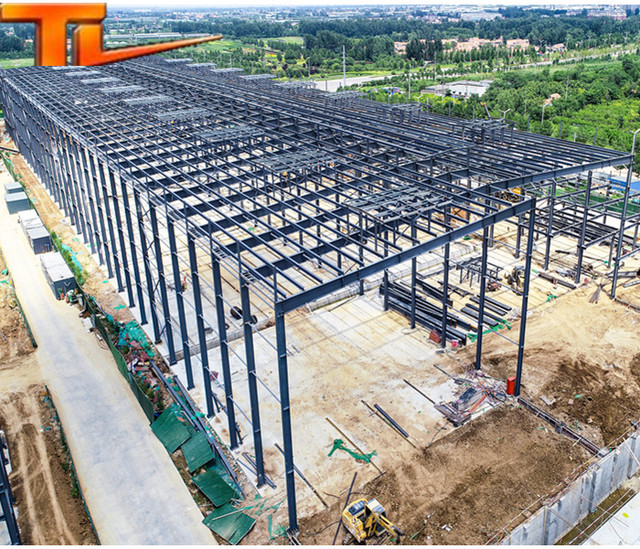
Factory price prefabricated steel structure workshop — cost-effective industrial solution.
What Are the Top 5 Steel Industry Trends for 2026?
1. Green Steel and Decarbonization
Steel production accounts for roughly 10% of global CO₂ emissions. The industry is responding with transformative technologies:
- Electric Arc Furnaces (EAFs) using up to 100% recycled scrap steel
- Hydrogen-based Direct Reduced Iron (DRI) that emits only water vapor
- Carbon capture and storage at integrated steel mills
Verified low-carbon steel is becoming a competitive requirement for major infrastructure bids. Green building certifications increasingly mandate environmental product declarations (EPDs) and lifecycle carbon accounting.
What is Green Steel? Green steel is produced without fossil fuels. Steelmakers use hydrogen instead of coal to process iron ore, releasing water vapor — not CO₂ — as the byproduct. Combined with EAF technology powered by renewable electricity, this enables near-zero-emission steel production.
2. AI and Automation in Steel Fabrication
Artificial intelligence has moved from experimentation to baseline requirement in 2026:
- Predictive quality control: Machine learning detects defects early, reducing rework costs
- Optimized production scheduling: AI systems balance furnace loads, material flows, and energy consumption
- Robotic welding and cutting: Automated systems deliver consistent quality for high-tolerance applications
Fabricators investing in AI-driven manufacturing report significantly improved throughput and reduced operational costs.
3. Domestic and Regional Supply Chains
Global trade uncertainty is reshaping steel supply chains. Buyers increasingly prioritize:
- Regional sourcing to reduce logistics costs and tariff exposure
- Supplier diversification to mitigate single-source risk
- Traceability and compliance documentation
For international buyers, this means evaluating suppliers with diversified production bases, robust logistics networks, and proven export compliance.
4. Advanced High-Performance Alloys
Demand is rising for materials that deliver higher strength, improved corrosion resistance, and reduced weight. The U.S. high-performance alloys market is projected to grow at a CAGR of 8.35% through 2033, driven by aerospace, defense, energy, and high-performance transportation sectors. For structural applications, advanced weathering steels and high-strength low-alloy (HSLA) grades are increasingly specified.
5. Modular Construction Integration
Modular steel construction — erecting buildings from pre-manufactured volumetric modules — is gaining traction in healthcare, education, and multi-family residential sectors. Benefits include:
- Consistent factory-controlled quality
- 30-50% faster project completion
- Reduced on-site disruption and waste
This trend aligns with the broader industry shift from variable job-site production to controlled factory environments.
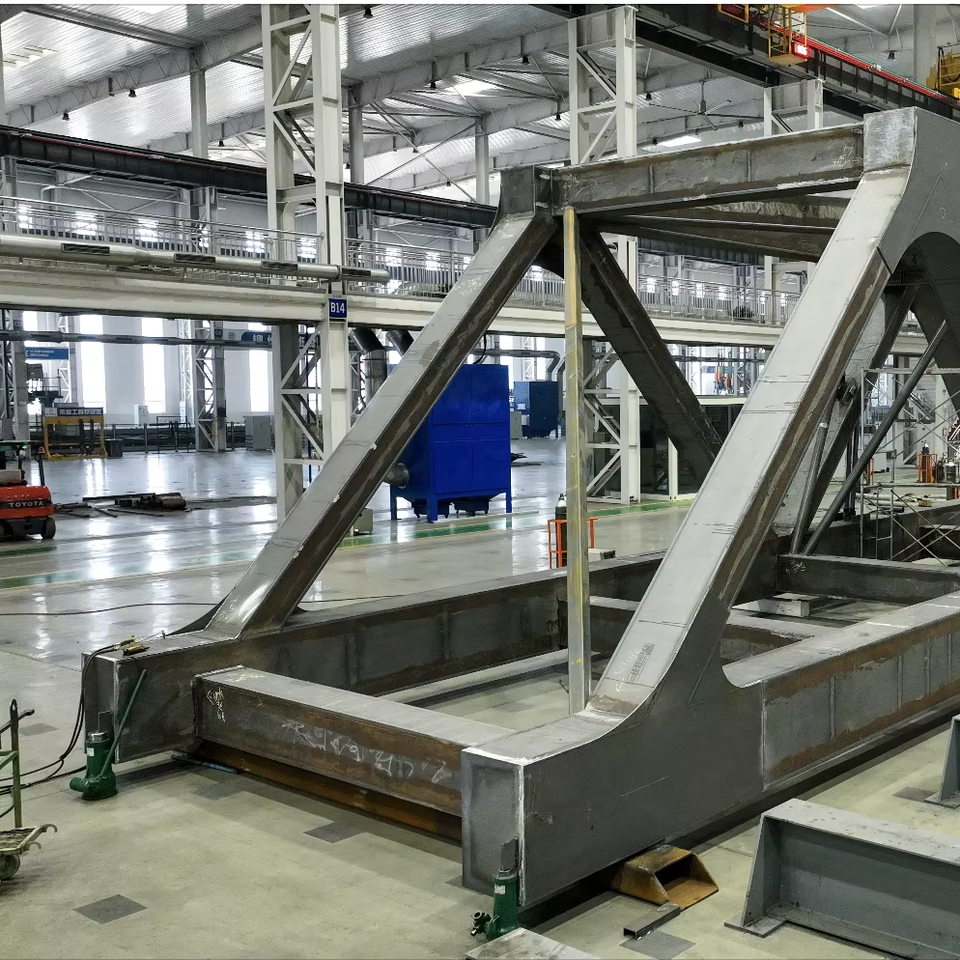
SINO EAST heavy-duty steel structure — engineered for critical infrastructure applications.
How to Choose the Right Steel Structure Supplier?
Selecting a reliable steel structure manufacturer is one of the most consequential decisions in any construction project. Here are the criteria that matter:
Certifications and Quality Systems
Look for internationally recognized certifications:
- ISO 9001:2015 — Quality management systems
- ISO 14001:2015 — Environmental management
- ISO 45001:2018 — Occupational health and safety
- ISO 3834-2:2021 — Welding quality requirements
- IAS AC472 — Accreditation for metal building manufacturers
Production Capacity and Experience
- Years in operation: Established manufacturers with 20+ years of experience demonstrate stability and accumulated expertise.
- Factory scale: A production facility of 50,000+ m² indicates the capacity to handle large-volume projects.
- Annual output: Manufacturers producing 100,000+ metric tons annually can reliably meet project timelines.
Engineering and Design Capability
The best suppliers offer more than fabrication — they provide end-to-end solutions:
- Structural design and engineering
- 3D modeling and BIM integration
- Custom fabrication to project specifications
- Installation supervision and technical support
Export Experience and Logistics
For international projects, evaluate:
- Export history and geographic coverage
- Packaging standards for ocean freight
- Documentation and customs compliance
- After-sales support and warranty terms
Sino East Steel Group: 30+ Years of Steel Structure Excellence
Sino East Steel Group, established in 1993 and headquartered in Tianjin Industrial Park, Daqiuzhuang, is one of China’s leading comprehensive steel manufacturers. With over 30 years of industry experience, the company has built a reputation for quality, reliability, and comprehensive service.
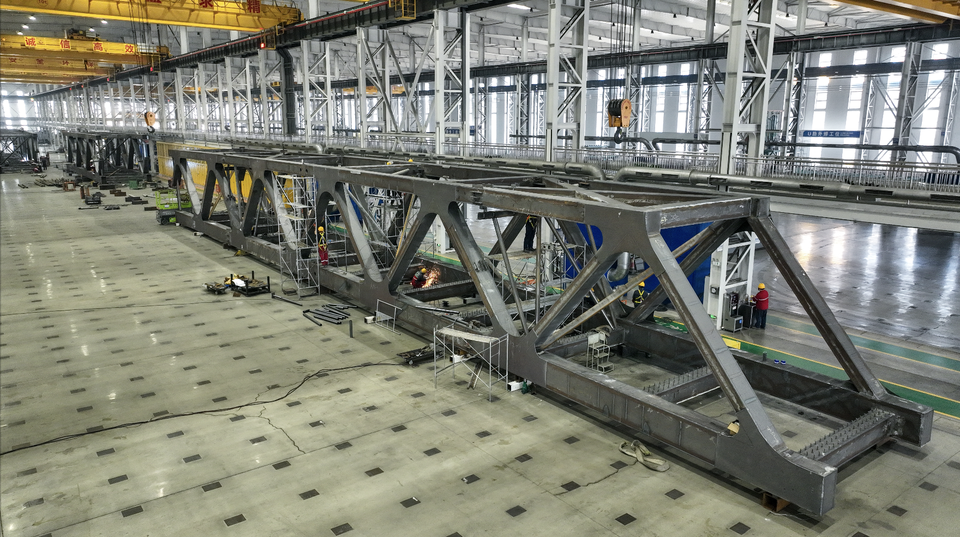
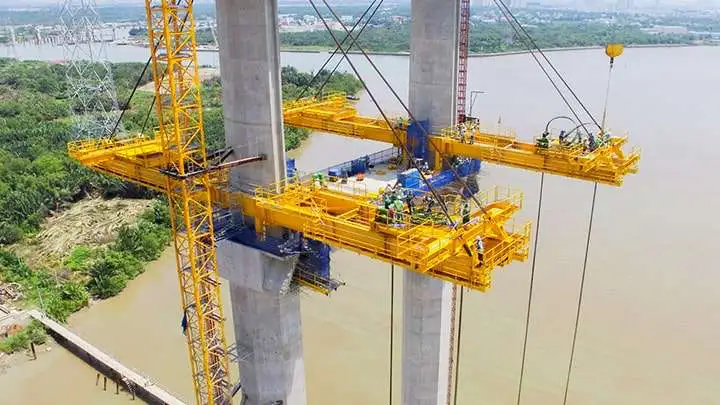
SINO EAST steel structure bridge — heavy-duty design with hot-dip galvanized finish.
Core Capabilities
| Metric | Detail |
|---|---|
| Founded | 1993 |
| Factory Area | 60,000 m² |
| Annual Production Capacity | 500,000+ metric tons |
| Certifications | ISO 9001, ISO 14001, ISO 45001, ISO 3834-2, IAS AC472 |
| Export Markets | Australia, Americas, Middle East, Africa, South America, Southeast Asia |
Steel Structure Product Portfolio
- Pre-Engineered Buildings (PEB) — Optimized design, factory-fabricated, rapid on-site assembly
- Heavy Industry Steel Structure — Multi-story industrial frameworks, crane-supporting structures
- Infrastructure & Transport — Bridges, metro stations, terminal buildings
- Offshore Structures — Platforms, jackets, modules for marine environments
- Processing Industry — Refineries, chemical plants, material handling facilities
- Airport Steel Structure — Terminal buildings, hangars, support facilities
- Oil, Gas, Energy & LNG — Critical infrastructure for the energy sector
- Tank Structures — Storage tanks, silos, containment systems
Why Choose Sino East Steel?
- End-to-end service: From structural design and engineering to fabrication, logistics, and installation support.
- Quality assurance: Multi-stage inspection protocols with raw material traceability and finished product testing.
- Competitive pricing: Integrated production — from raw steel processing to finished structures — eliminates middleman costs.
- Global logistics: Established export workflows with reliable ocean freight partnerships ensure on-time delivery worldwide.
- Customer-first philosophy: Dedicated project management from inquiry through post-delivery support.
Contact Sino East Steel Group for your next steel structure project. Visit www.asia-structures.com or reach out to our engineering team for a customized quotation.
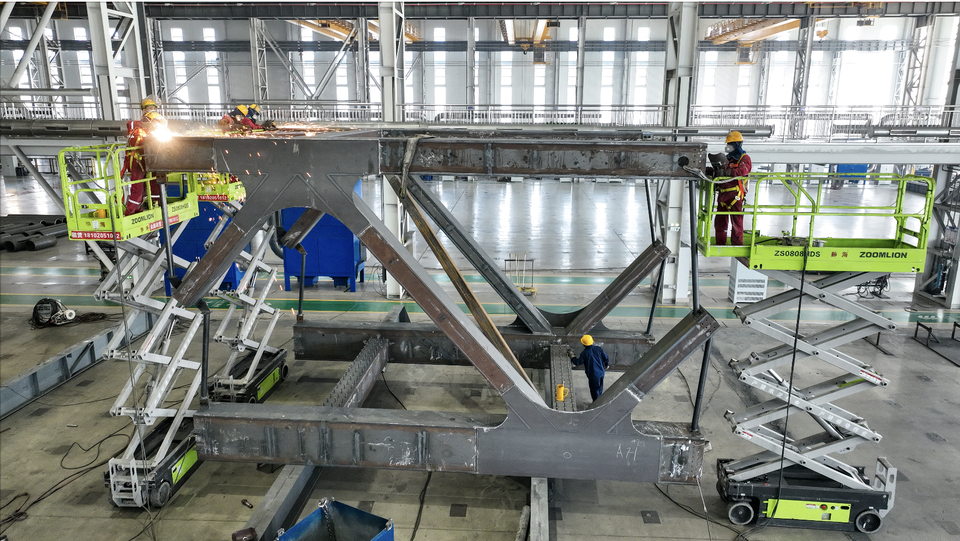
SINO EAST manufacturing facility — advanced fabrication and quality control systems.
Frequently Asked Questions About Steel Structures
What is the difference between pre-engineered and conventional steel buildings?
Pre-engineered buildings (PEB) are designed and fabricated in a factory using standardized components optimized for each project’s specific loads and dimensions. Conventional steel buildings are designed and fabricated piece by piece on-site. PEBs offer faster construction (30-50% time savings), lower cost, and better quality control due to factory fabrication.
How long does a steel structure building last?
A properly designed and maintained steel structure has a service life of 50+ years. With protective coatings (galvanization, paint systems) and regular inspection, many steel structures exceed 75 years of service. Steel’s durability, resistance to pests, and dimensional stability contribute to this exceptional longevity.
Is steel structure construction more expensive than concrete?
Initial material costs for steel may be higher than reinforced concrete in some markets, but total project costs are often lower when you account for: faster construction (reduced labor and equipment rental), smaller foundations (steel is lighter), greater usable floor area (thinner columns), and lower lifecycle maintenance costs.
Can steel structures be customized for specific project requirements?
Yes. Modern steel structure manufacturers offer extensive customization including building dimensions, roof slope, bay spacing, crane capacity, wall and roof cladding options, insulation systems, doors, windows, and ventilation. Engineering teams use 3D modeling software to optimize each structure for its specific site conditions and functional requirements.
Are steel structures environmentally friendly?
Steel is the most recycled material on Earth. Structural steel is 100% recyclable without loss of properties, and a significant portion of global steel production already uses recycled scrap in electric arc furnaces. Additionally, steel buildings can be designed for energy efficiency with cool roofing, solar panel integration, and high-performance insulation systems.
Steel Structure Applications: From Warehouses to Landmark Infrastructure
Steel structures serve an extraordinary range of applications. Understanding the specific requirements of each segment helps buyers and engineers make informed decisions.
Industrial Warehouses and Workshops
Industrial facilities represent the largest application segment for structural steel. Modern steel structure warehouses offer:
- Clear-span interiors: Column-free spaces up to 150 meters wide, maximizing usable floor area for storage, logistics, and manufacturing operations.
- Rapid deployment: A 10,000 m² warehouse can be structurally complete in 6-8 weeks from foundation completion.
- Expandability: Steel structures accommodate future expansion with minimal disruption — simply extend the frame and cladding.
- Cost efficiency: At $20-50 per square meter for the structural frame, steel warehouses deliver the lowest cost per square meter of usable space among all structural systems.
Commercial and Multi-Story Buildings
Steel-framed commercial buildings are increasingly specified for:
- Shopping malls and retail centers requiring large, open floor plates
- Office buildings where floor-to-floor height efficiency and future adaptability matter
- Mixed-use developments combining retail, office, and residential spaces
- Hotel and hospitality projects demanding fast construction timelines
The ability to erect one floor every 3-4 days with steel framing — compared to 7-10 days for concrete — translates directly into earlier occupancy and revenue generation.
Infrastructure and Transportation
Bridges, airport terminals, metro stations, and railway structures demand the highest levels of engineering precision. Steel’s high strength-to-weight ratio is particularly valuable for:
- Long-span bridges where self-weight is a critical design factor
- Airport terminals requiring column-free spaces of 50+ meters
- Transit stations where construction speed minimizes public disruption
Energy and Industrial Processing
The energy transition is creating new demand for steel structures in:
- Solar farm mounting systems and tracker structures
- Wind turbine towers and nacelle support frames
- LNG terminals and gas processing facilities
- Petrochemical plants requiring heavy-duty structural frameworks
- Data centers — a rapidly growing segment where structural steel’s speed-to-market advantage is critical
Agricultural and Cold Storage
Specialized steel structures serve the agricultural sector with:
- Grain storage and processing facilities
- Livestock housing with controlled environments
- Cold storage warehouses with insulated panel systems
- Equipment storage and maintenance bays
The customization flexibility of steel means each building is optimized for its specific operational requirements — ventilation, insulation, loading, and material handling.
Conclusion: Steel Structures Are the Future of Construction
The structural steel industry is at a pivotal moment. Market fundamentals are strong — a $123 billion global market growing at 6.7% CAGR — while technological trends in green steel, AI-driven fabrication, and modular construction are reshaping competitive dynamics.
For project owners, developers, and procurement professionals, the key to success lies in partnering with established, certified manufacturers who combine engineering expertise with global logistics capability. Sino East Steel Group, with 30+ years of experience, ISO-certified quality systems, and a comprehensive steel structure product portfolio, stands ready to support your next project.
The future of construction is steel. The future of steel is now.
This article is published by Sino East Steel Group. For inquiries about steel structure projects, contact our team at www.asia-structures.com.
Sources:
– Grand View Research — Structural Steel Market Report 2026-2033
– IMARC Group — Prefabricated Building and Structural Steel Market 2025
– World Steel Association — Global Steel Demand Forecast
– Eagle Steel — Steel Manufacturing Trends 2026
– ISE — Top Steel Fabrication Trends 2026
Project Cost Guides & China Factory Supply
Transparent 2026 pricing benchmarks for importers, contractors and developers.
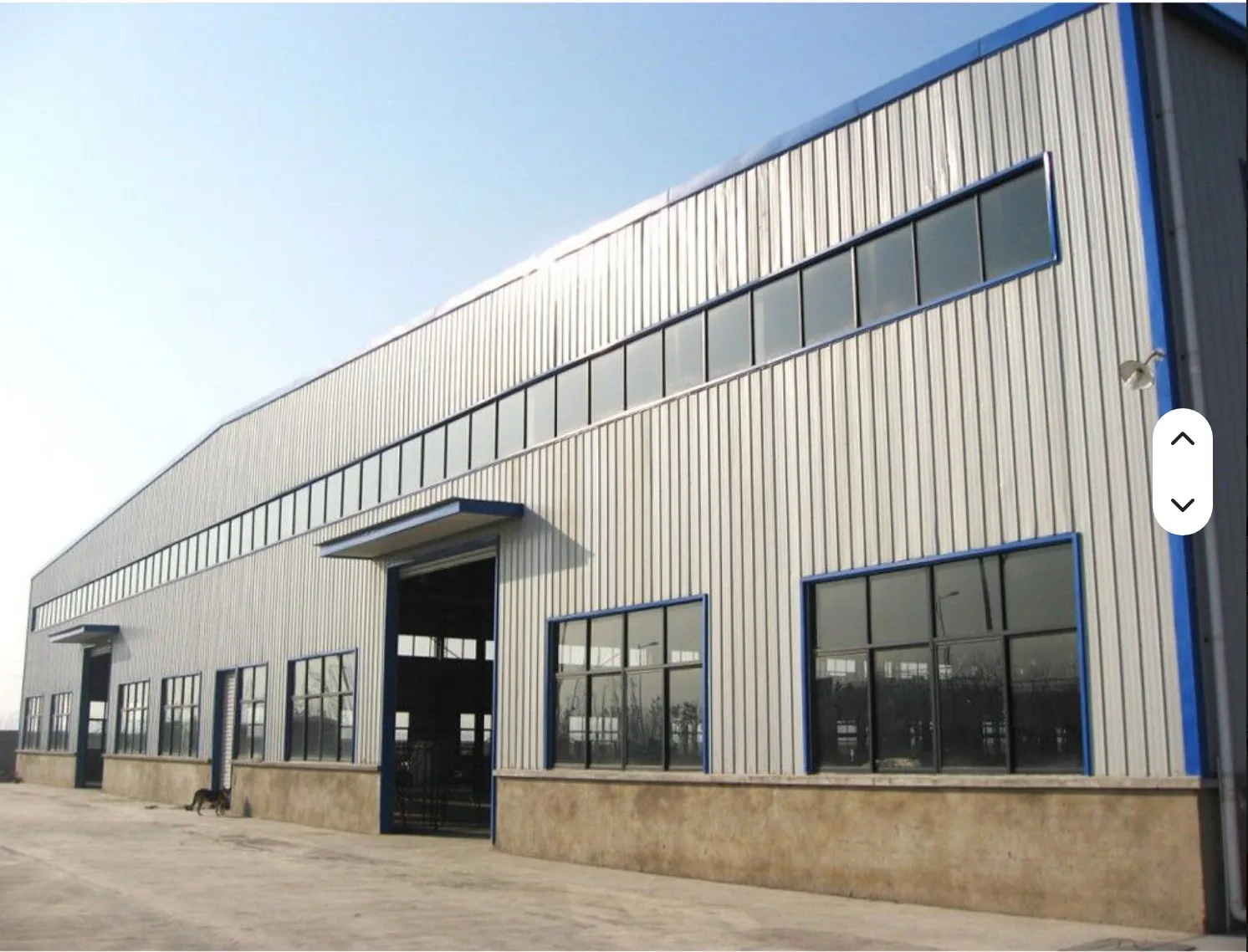 PEB Building Cost in UAEReal 2026 price per square metre for warehouses and factories in Dubai, Abu Dhabi and the wider Gulf, including shipping, customs and erection.Dubai / Abu Dhabi benchmarksView details →Nigeria
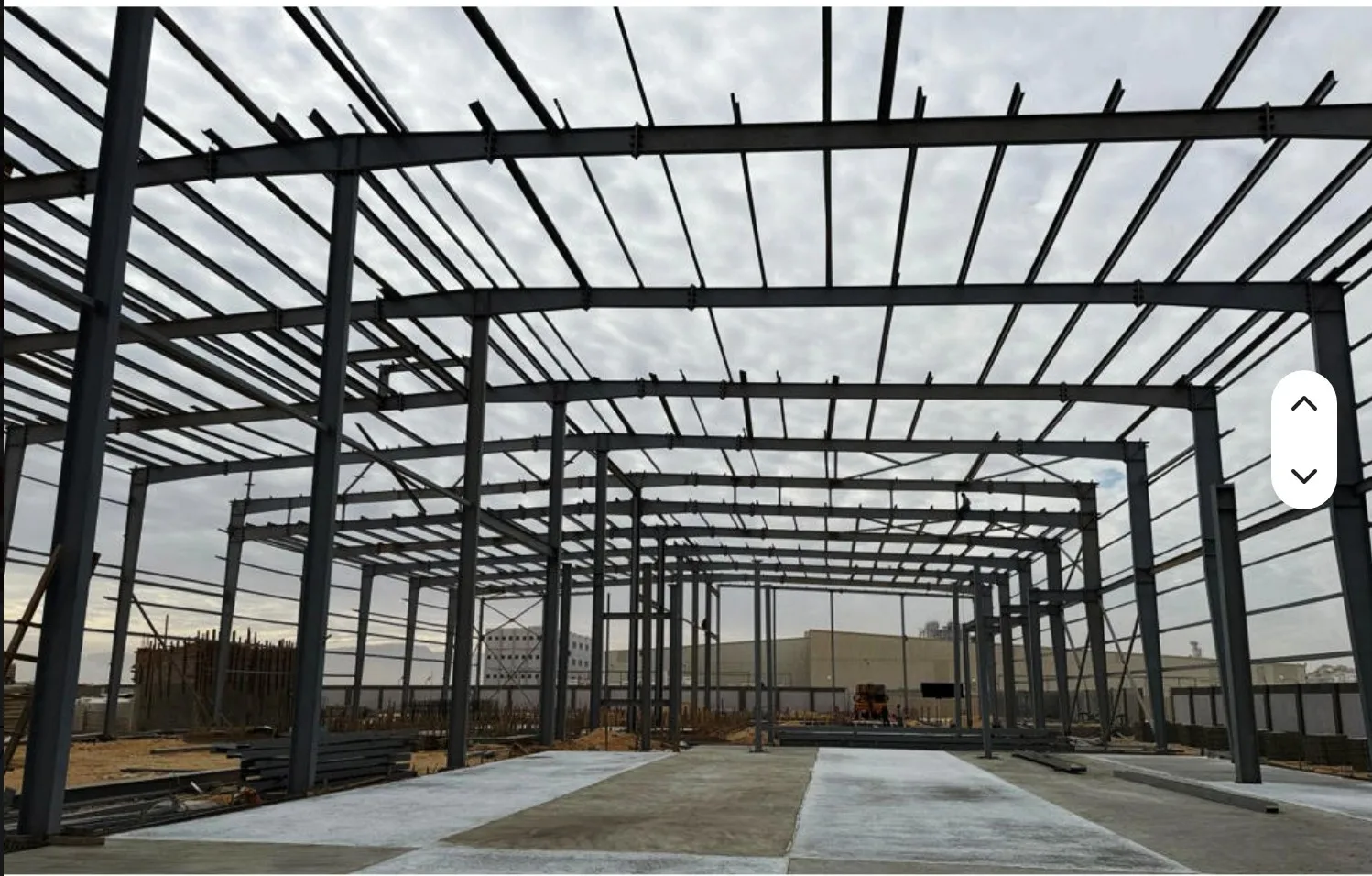 Steel Structure Cost in NigeriaLanded cost breakdown for Lagos and Abuja projects: steel tonnage, freight to Apapa, clearing, and local erection labour rates.Lagos / Abuja landed costView details →Kenya
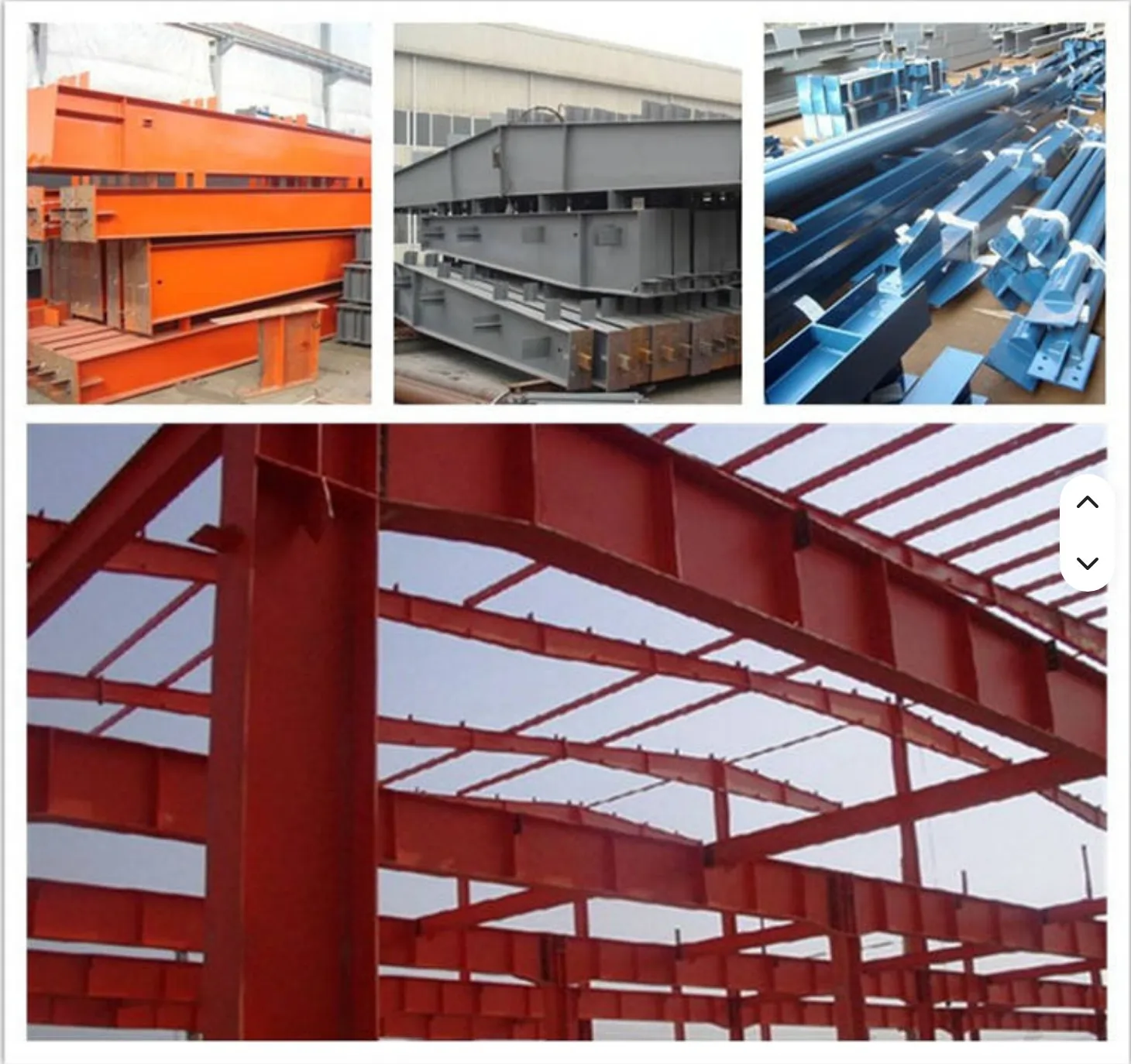 Steel Structure Cost in KenyaMombasa port charges, duty, transport and installation factored into a full 2026 budget for Nairobi and Mombasa industrial buildings.Nairobi / Mombasa budgetView details →China Factory
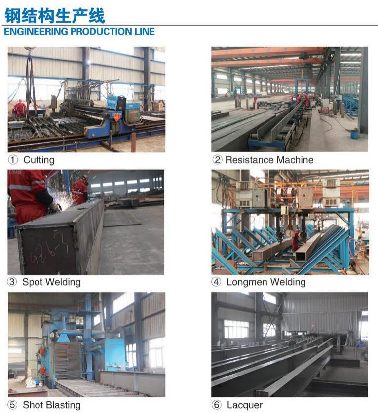 China Steel Structure ManufacturerOur own fabrication lines, ISO and CE certification, 350,000 sqm annual capacity and direct factory pricing with no trading margin.Direct factory quotationView details →