If you are pricing a steel warehouse, factory, hangar or pre-engineered building, the fastest way to overspend is to order the wrong steel sections. Buy a Z section where a C purlin belongs, specify a solid round bar where an RHS would do the same job at half the weight, or call a 2 mm sheet a plate, and your bill of quantities quietly grows by 10-20%. This guide explains the difference between every major family of steel sections used in steel structure buildings – hot-rolled and cold-formed, open and hollow, flat and profiled – and shows you how to choose the right one for each part of your building.
It is written for importers, developers, general contractors and procurement teams who buy steel from a China steel structure manufacturer and want to speak the same language as their engineer and their supplier. Every section family below links to a detailed technical page with sizes, weights, prices and specifications, so you can jump straight to the product you need.
1. Hot-Rolled vs Cold-Formed Steel Sections: Know Which Family You Are Buying
All structural steel sections belong to one of two manufacturing families, and the family determines thickness, strength, price and where the member is used.
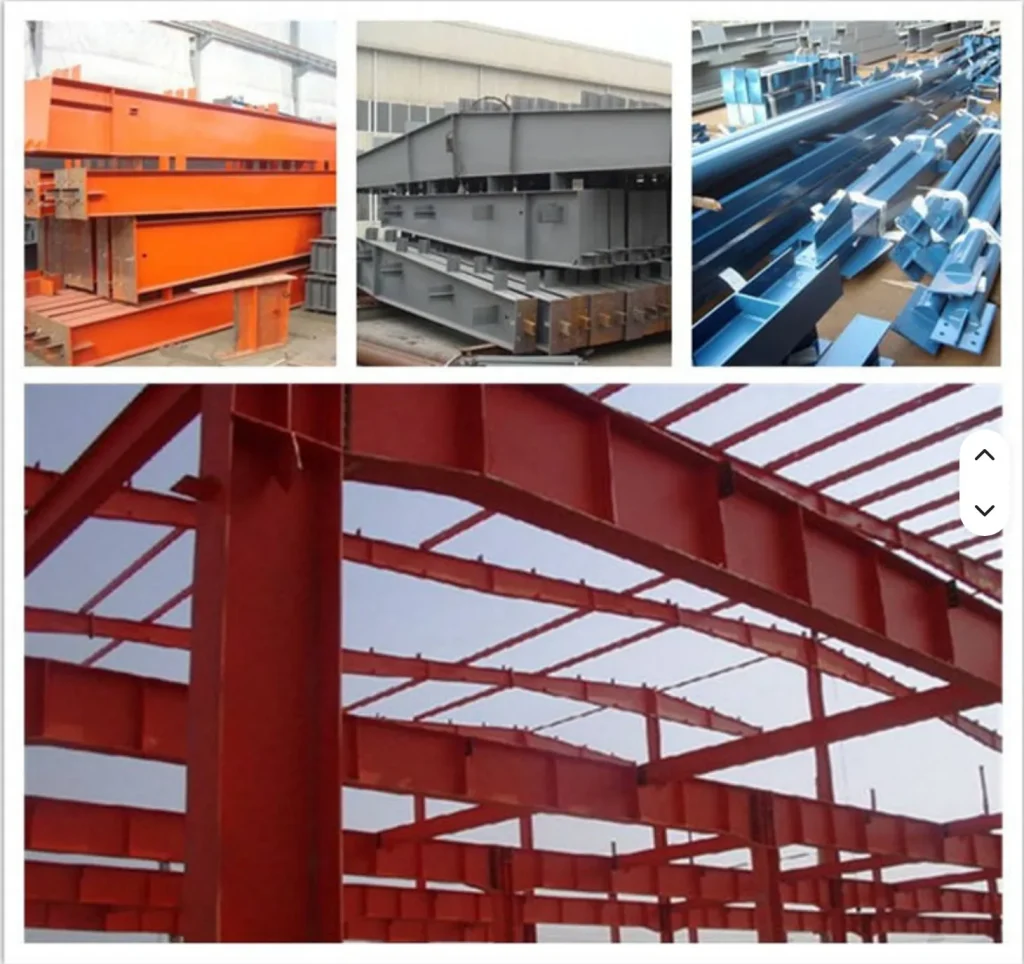
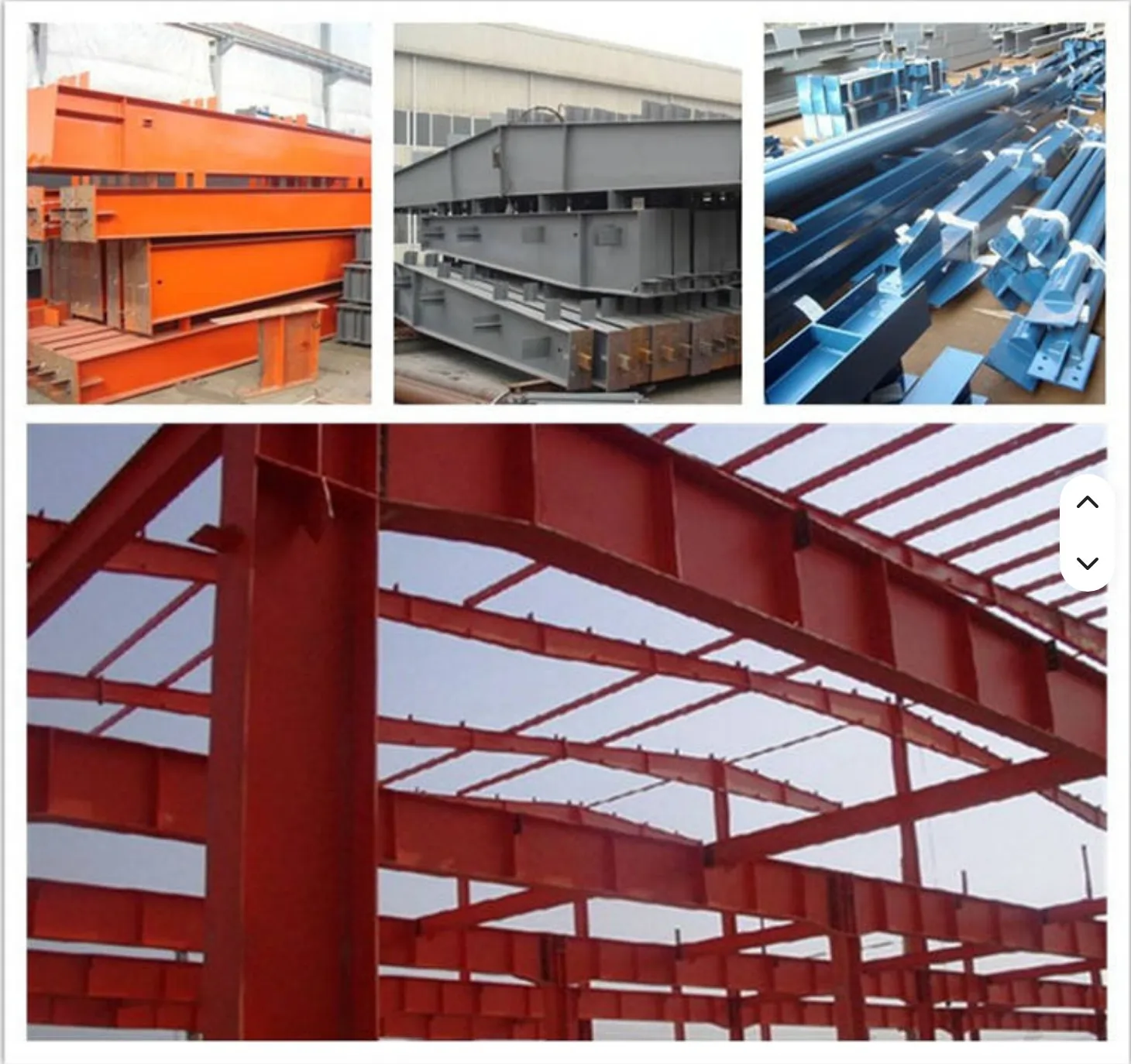
Hot-rolled sections are formed while the steel is heated above recrystallisation temperature and then rolled into shape. They have thicker walls (typically 3 mm and above), certified structural grades (S235, S275, S355 per EN 10025, or equivalent AISC grades), and carry the primary loads of a building. This family includes I/H beams, columns, UPN and PFC channels, angles, hollow sections and plate.
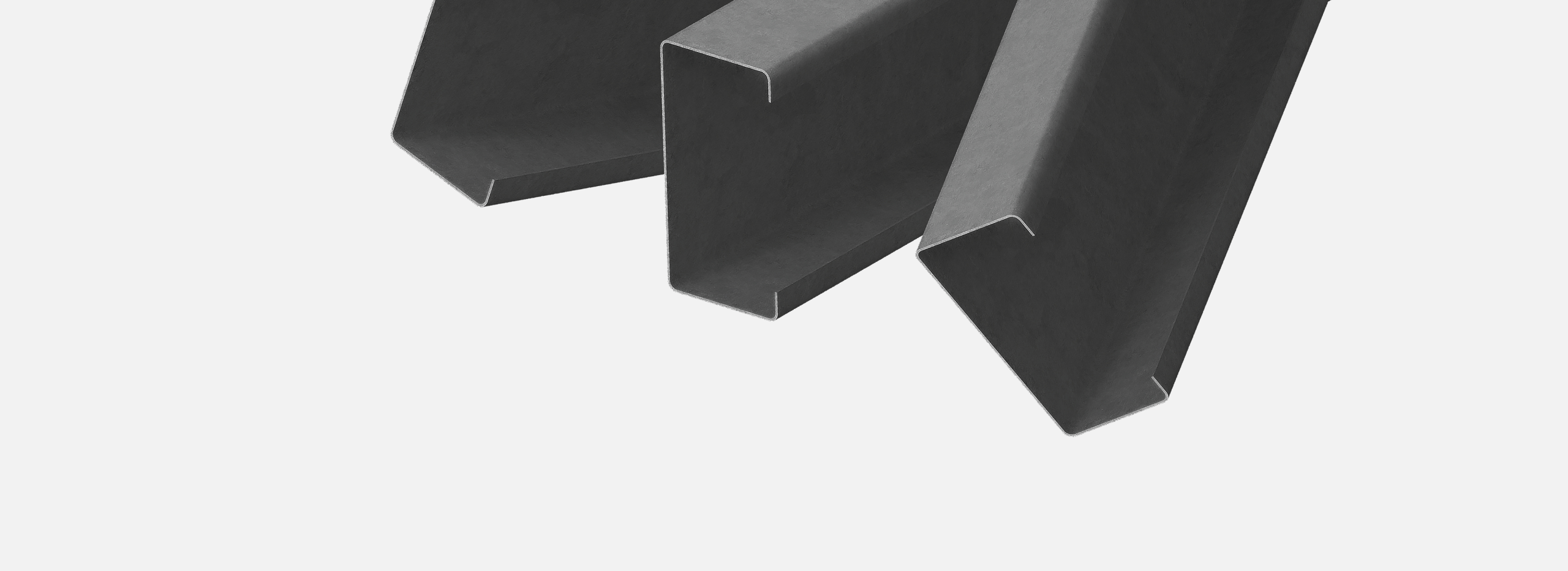
Cold-formed sections are roll-formed at room temperature from galvanized steel strip, usually 1.5-3.0 mm thick. They are light, cheap per metre, precise in dimension and arrive pre-galvanized. They carry secondary loads – roof purlins, wall girts, eave struts – but they are not designed to replace hot-rolled members in the main frame. This family includes C purlins, Z purlins and lipped channels, produced to EN 10162 and similar standards.
| Comparison | Hot-rolled sections | Cold-formed sections |
|---|---|---|
| Forming process | Rolled at high temperature | Roll-formed from strip at room temperature |
| Typical thickness | 3 mm and above | 1.5-3.0 mm |
| Typical grades | S235JR, S275JR, S355JR / A36, A572 | G300-G550 structural steel, often pre-galvanized (Z275+) |
| Typical role | Primary frame, heavy connections | Secondary members: purlins, girts, cladding rails |
| Relative cost | Higher per tonne, lower per unit of strength | Lower per metre, fast to fix |
If you are buying complete buildings, you need both families. The frame is hot-rolled; the purlins and girts that carry the roof and wall cladding are almost always cold-formed.
2. Roof and Wall Framing: C Purlin vs Z Purlin
Purlins run across the roof slope and support the roof sheeting; girts run horizontally on the walls and support the wall cladding. The two dominant profiles are the C purlin and the Z purlin, and choosing between them is the single most common question in secondary steelwork.
C purlins (C sections with lipped flanges) are the default choice for wall girts and for roof spans up to roughly 5-6 m. They are simple to bolt through the web, easy to terminate at eaves and openings, and they look clean in exposed installations.
Z purlins (zed purlins) take over on longer roof spans. Their key advantage is that one Z section nests inside the next, so sections can be lapped over the rafters to form a continuous beam. Lapping roughly 10-15% of the span over each support turns a series of simple spans into continuous spans, which typically saves 10-15% of steel weight on large roofs compared with a non-lapped C purlin solution.
| Criteria | C purlin | Z purlin |
|---|---|---|
| Best for | Wall girts, short roof spans, simple end details | Long roof spans (over about 5-6 m), lapped continuous runs |
| Connection | Bolt through web | Sleeved or lapped with bolted flange |
| Nesting / lapping | No practical nesting | Nests and laps, saving steel on long spans |
| Common names | C section, lipped channel purlin | Zed purlin, Z section |
Your supplier should give you a purlin schedule with section depth, steel thickness and grade, and span table – our Z purlin sizes and weight chart and C purlin specification pages show how these are documented. For hot-dip galvanized or Z275 pre-galvanized material, say so in your inquiry, because it changes the price per tonne.
3. Channels: UPN, PFC, Lipped and Plain Channels
Channels are U-shaped open sections used where a flat web makes connections easy and where load is mainly one-directional bending. They are common as wall girts, lintels, eave members, edge beams and light structural members. Within the channel family you must distinguish four profiles, because they are not interchangeable:
- Plain channels – simple U shapes, often cold-formed or light hot-rolled, used for girts, framing and fabrication.
- Lipped channels – cold-formed C-shaped channels with return lips that stiffen the flanges; the standard profile for secondary steelwork in many markets.
- UPN channels (also written UPN/UPE) – hot-rolled metric channels with tapered flanges, a full structural section used in primary and secondary frames, machine bases and heavy fabrication.
- Parallel flange channels (PFC) – hot-rolled channels with parallel flange faces, easier to connect and preferred in modern design to EN 10279 / European section tables; tapered flange channels are the traditional rolling used where a PFC is not required.
As a rule: cold-formed plain and lipped channels belong to the light secondary family, while UPN and PFC are true hot-rolled structural members with certified mechanical properties.
4. Angles: Equal and Unequal
Equal angles and unequal angles (L sections) are the workhorses of steel construction: bracing, truss diagonals, purlin cleats, base connection cleats, ladder and cable-tray supports, mezzanine framing and hundreds of small connection details. They are hot-rolled to EN 10056 or ASTM A6, cheap per tonne, and extremely easy to bolt or weld.
Choose an equal angle (for example L50x50x5 or L100x100x10) when the member works in both directions or when simplicity matters. Choose an unequal angle (for example L75x50x6) when the long leg needs to sit flat against a web or flange, or when the load is predominantly about one axis. Angles are efficient in tension and in short compression members, but they are not the right choice for long, heavily loaded bending members – that is a beam or channel job.
5. Primary Frames: Beams and Columns
The main frame of a steel building is built from I/H-shaped hot-rolled sections. Three families cover most projects:
- Universal columns (UC) – square-ish section with wide, thick flanges, optimised to carry axial compression; they are the default column section for multi-storey and heavy single-storey frames.
- Metric beams (MB) – the IPE-family and universal beam profiles with deep webs and narrower flanges, optimised for bending; they form rafters, floor beams, crane girders and portal rafters.
- Metric columns (MC) – the lighter, more compact channel-adjacent column range used for mezzanine columns, posts and light frames where UC is over-specified.
The practical rule for buyers: bending over a long span means a beam (deep web, lighter per metre of span), compression with buckling risk means a column section (thicker flanges, higher radius of gyration about both axes). Your engineer converts loads into a section schedule; your supplier then prices those exact serial sizes – for example UC 203x203x46 or MB 300 (IPE 300) – so that every member matches the approved design.
6. Hollow Sections and Solid Bars
Closed sections behave differently from open sections, and the difference matters in three situations: visible architecture, compression members and torsion.
Circular hollow sections (CHS), square hollow sections (SHS) and rectangular hollow sections (RHS) are hot-finished or cold-formed tubular sections to EN 10210 / EN 10219. A closed shape has a high radius of gyration in every direction, so a tube column carries far more load per kilogram than an open section of the same weight. Tubes also have excellent torsional stiffness – they do not twist under eccentric load the way channels and beams do – which is why they are standard for trusses, exposed columns, handrails, sign gantries, racking and anything architectural.
Solid round bars, square bars and flat bars are not structural framing members in the same sense. They are used for machined parts, anchors, braces, grillwork, ladders, tie rods, welding consumables and general fabrication stock. They are sold by diameter or section and by length, and they are usually the cheapest way to buy steel by the metre for non-framing uses.
Do not substitute a solid bar where a hollow section is specified: the tube will usually win on strength-to-weight, and the bar will win on price and machining simplicity. Let the drawing decide.
7. Plates, Sheets and Chequered Plates
Flat products confuse more buyers than any other category because the boundary between them is a matter of thickness convention. The international convention used by most mills is:
- Steel plate – hot-rolled flat product 3 mm and thicker, in widths up to 2.5 m plus. Plate is the material of base plates, column stiffeners, connection gussets, embedment plates, tank and hopper shells, and heavy fabrication. It is quoted per tonne with cut-to-size or plasma/CNC profiling options.
- Steel sheet – flat product thinner than 3 mm, typically 0.4-2.5 mm, frequently supplied galvanized or colour-coated. Sheet and coil go into roofing, wall cladding, liner trays, flashings and light fabrications.
- Chequered (tread) plates – plate or heavy sheet with a raised lozenge or teardrop pattern rolled into the surface, used for floors, stair treads, walkways, platforms and vehicle decks where slip resistance matters. Common thicknesses run from 3 mm to 8 mm.
When you request a quote for plate, state grade (for example S235JR or S355JR), thickness, width, length and quantity, and ask whether the mill certificate is EN 10204 3.1. For chequered plate, the pattern direction and the tolerance class affect nesting, so give your fabricator the full cutting list rather than an approximate tonnage.
8. Section Selection: Decision Matrix
Use the matrix below to match each part of a typical portal-frame or truss building to its standard section family. It reflects common international practice for warehouses, factories and workshops:
| Building element | Recommended section | Why |
|---|---|---|
| Roof purlins, span up to 5-6 m | C purlin (cold-formed) | Simple bolted fixing, cheap per metre |
| Roof purlins, long spans | Z purlin (lapped) | Continuous action saves 10-15% weight |
| Wall girts | C purlin or plain channel | Flat web for cladding rails and windows |
| Portal rafters, floor beams | Metric beam (MB / IPE-type) | Efficient in bending over long spans |
| Columns, heavy vertical loads | Universal column (UC) | High compression capacity, low buckling risk |
| Light posts, mezzanine columns | Metric column (MC) | Lighter and cheaper than UC at small loads |
| Bracing, truss diagonals, cleats | Equal / unequal angles | Cheap, easy to bolt, efficient in tension |
| Exposed columns, trusses, handrails | CHS / SHS / RHS | High stiffness both axes, torsional resistance, clean look |
| Base plates, stiffeners, gussets | Steel plate (3 mm+) | Thick flat material for heavy connections |
| Roofing, cladding, liners | Steel sheet / coil | Light, galvanized or coated, spans sheeting rails |
| Floors, stairs, platforms | Chequered plate | Slip-resistant raised pattern |
| Anchors, tie rods, machining stock | Round / square / flat bars | Solid sections for non-framing uses |
9. Steel Grades and Corrosion Protection
Two decisions sit above section choice: grade and protection. Structural hot-rolled steel is normally specified as S235, S275 or S355 (EN 10025-2) or A36/A572 (ASTM) – S355 gives roughly 18% higher design strength than S275 for the same section, so upgrading the grade can let your engineer reduce member sizes. For cold-formed purlins and girts, specify the steel grade and the zinc coating together, for example G550 + Z275, or ask for hot-dip galvanizing after fabrication if the environment is coastal or aggressive.
Load assumptions – wind, snow, seismic and crane loads – decide the section sizes, and they are set by the project location and the design code (AISC 360, Eurocode 3, GB 50017, AS 4100 or local equivalents). If you are new to this, start with our steel structure design guide covering AISC 360 and Eurocode 3, and confirm coating systems (ISO 12944) with your supplier before you order rather than after.
10. Sourcing Steel Sections from China: What Changes Your Price
When you buy from a Chinese steel manufacturer, five variables drive the landed cost: (1) the section schedule and tonnage per serial size, (2) the steel grade and zinc/coating specification, (3) whether sections are cut-to-length and bundled for container loading, (4) the mill certificate and inspection regime (EN 10204 3.1, third-party inspection), and (5) freight from Tianjin or your port of loading. A serious supplier prices the drawing and the full bill of quantities, not a vague tonne rate, and will flag where a different section family saves you money.
An integrated supplier can consolidate cold-formed purlins, hot-rolled beams, columns, channels, angles, hollow sections, bars and plates in one shipment, which reduces documentation and container cost. Sino East Steel Group manufactures and supplies exactly this full range from Tianjin, with ISO 9001:2015 certification and mill certificates for every heat. To compare suppliers properly, use our China vs local supplier comparison, and for verification steps before placing a large order, follow our manufacturer audit checklist.
Request a Quote for Steel Sections
Send us your building dimensions, the section schedule or drawing, and your delivery port – we will come back within 24 hours with a detailed quotation, section weights and a loading plan. To make your inquiry faster, include: project type and location, length x width x eave height, roof slope, design code, steel grade and coating, quantity or tonnage, and target delivery date.
You can also reach our export sales team directly:
Chat on WhatsApp
Email paul@sinoeaststeel.com
Or fill in the inquiry form below and our sales engineers will respond the same working day.
FAQ: Steel Sections for Steel Structure Buildings
What are the main types of steel sections used in steel structures?
A: Five families cover almost every steel building: cold-formed open sections (C and Z purlins, lipped channels), hot-rolled open sections (channels and angles), I/H-shaped beams and columns, hollow sections (CHS, SHS, RHS), and flat products (plate, sheet and chequered plate). Solid round, square and flat bars complete the range for non-framing uses.
What is the difference between hot-rolled and cold-formed steel sections?
A: Hot-rolled sections are rolled at high temperature with thicker walls (typically 3 mm and above) and certified structural grades, so they carry primary frame loads. Cold-formed sections are roll-formed from thinner galvanized strip (typically 1.5-3.0 mm), weigh less per metre and are used mainly for secondary members such as purlins, girts and cladding rails.
C purlin or Z purlin – which one should I use?
A: Use Z purlins for roof spans over roughly 5-6 m, because Z sections nest and lap over the supports to act as continuous beams and save 10-15% of steel weight. Use C purlins for shorter roof spans and for wall girts, where simple web bolting and clean end details matter more than lapping.
What is the difference between a channel and an angle section?
A: A channel is a U-shaped section with a flat web, so it resists bending about its strong axis and connects easily; it suits girts, lintels and light beams. An angle is an L-shaped section that is cheap and easy to bolt, ideal for bracing, truss diagonals and cleats, but inefficient as a long-span bending member.
When should I use hollow sections instead of open sections?
A: Use CHS, SHS or RHS for compression members such as columns and truss chords, for members in torsion, and for visible or architectural steel, because closed shapes have high stiffness about every axis and much better torsional resistance than open sections of the same weight. For light one-way bending members, open sections remain cheaper and easier to connect.
What is the difference between steel plate, steel sheet and chequered plate?
A: By common international convention, plate is 3 mm and thicker and is used for base plates, stiffeners and heavy fabrication; sheet is thinner than 3 mm and is used for roofing, cladding and liners; chequered (tread) plate carries a raised slip-resistant pattern and is used for floors, stair treads and platforms.
How do I choose the right steel section sizes for my project?
A: Member sizes come from structural design: loads (dead, live, wind, snow, seismic) are run through AISC 360, Eurocode 3, GB 50017 or your local code to produce a section schedule. As a buyer, give your supplier the building dimensions, eave height, roof slope and design code, and ask for a full bill of quantities and drawings, then compare complete schedules rather than piece prices.
Can I buy all steel sections from one manufacturer in China?
A: Yes. Integrated manufacturers such as Sino East Steel Group supply cold-formed purlins and channels together with hot-rolled beams, columns, channels, angles, hollow sections, bars, plates and sheets from one facility in Tianjin, with mill certificates (EN 10204 3.1) for each heat and consolidated container loading – which simplifies quality control, documentation and freight.
Recommended Steel Section & Profile Solutions
Mill-certified sections with full size charts, weight tables and cut-to-length service.
 C & Z Purlin SystemsCold-formed C and Z purlins from 1.5 mm to 3.0 mm, galvanised to Z275. Complete roof and wall package with cladding and accessories.Full size & weight chartView details →Buyer Guide
 Steel Section Selection GuideCompare H-beam, I-beam, channel, angle, hollow section and sheet pile side by side: dimensions, weight per metre and the right application for each.Specs, weights, tolerancesView details →Hollow Section
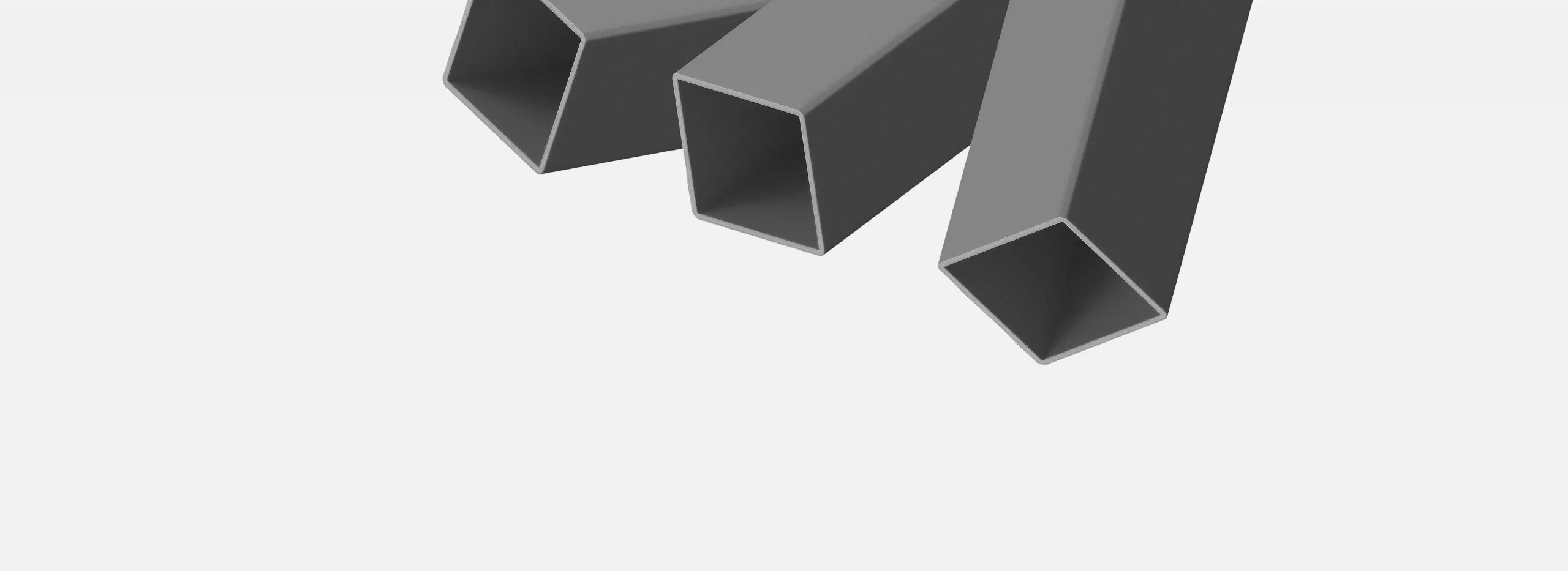 Square & Rectangular TubeSHS and RHS from 20x20 mm up to 400x400 mm, wall 1.5 mm to 20 mm, EN 10219 and ASTM A500. Pre-galvanised and cut-to-length options.EN 10219 / ASTM A500View details →Foundation
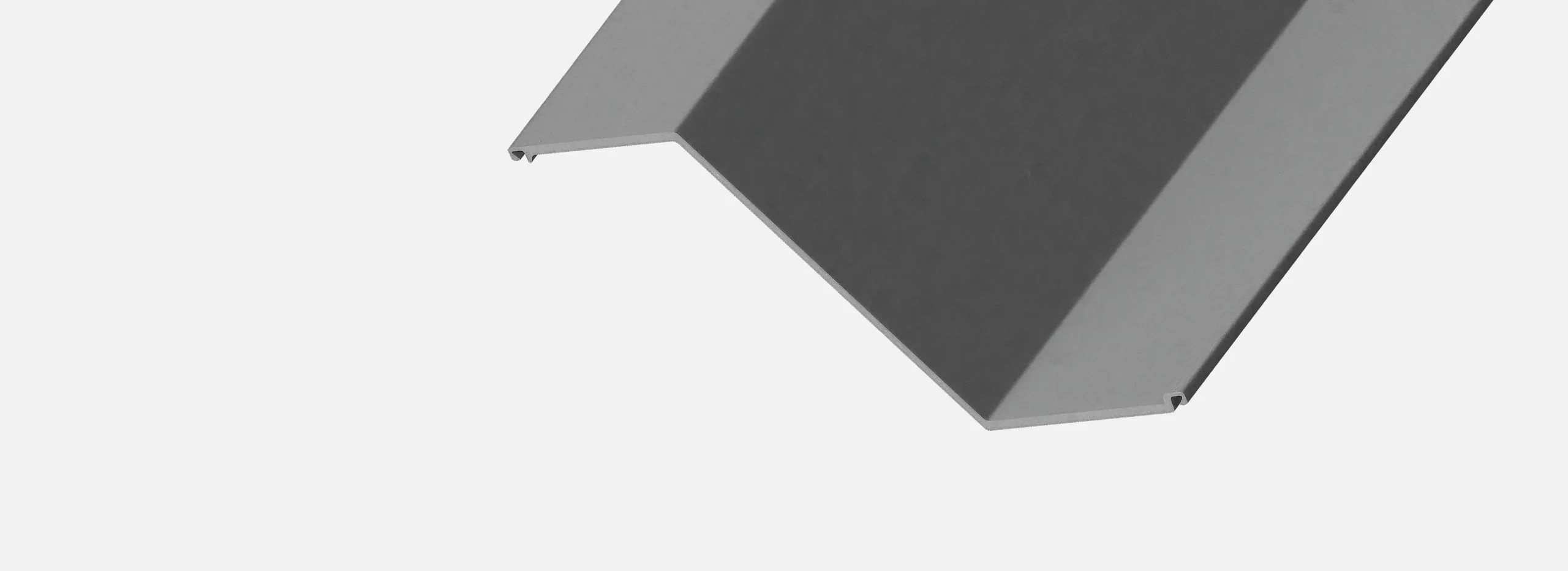 Steel Sheet Piles (Z & U)Z-type and U-type sheet piles for retaining walls, cofferdams and port works. Mill test certificates and third-party inspection available.Z-type & U-type in stockView details →